AI Overview
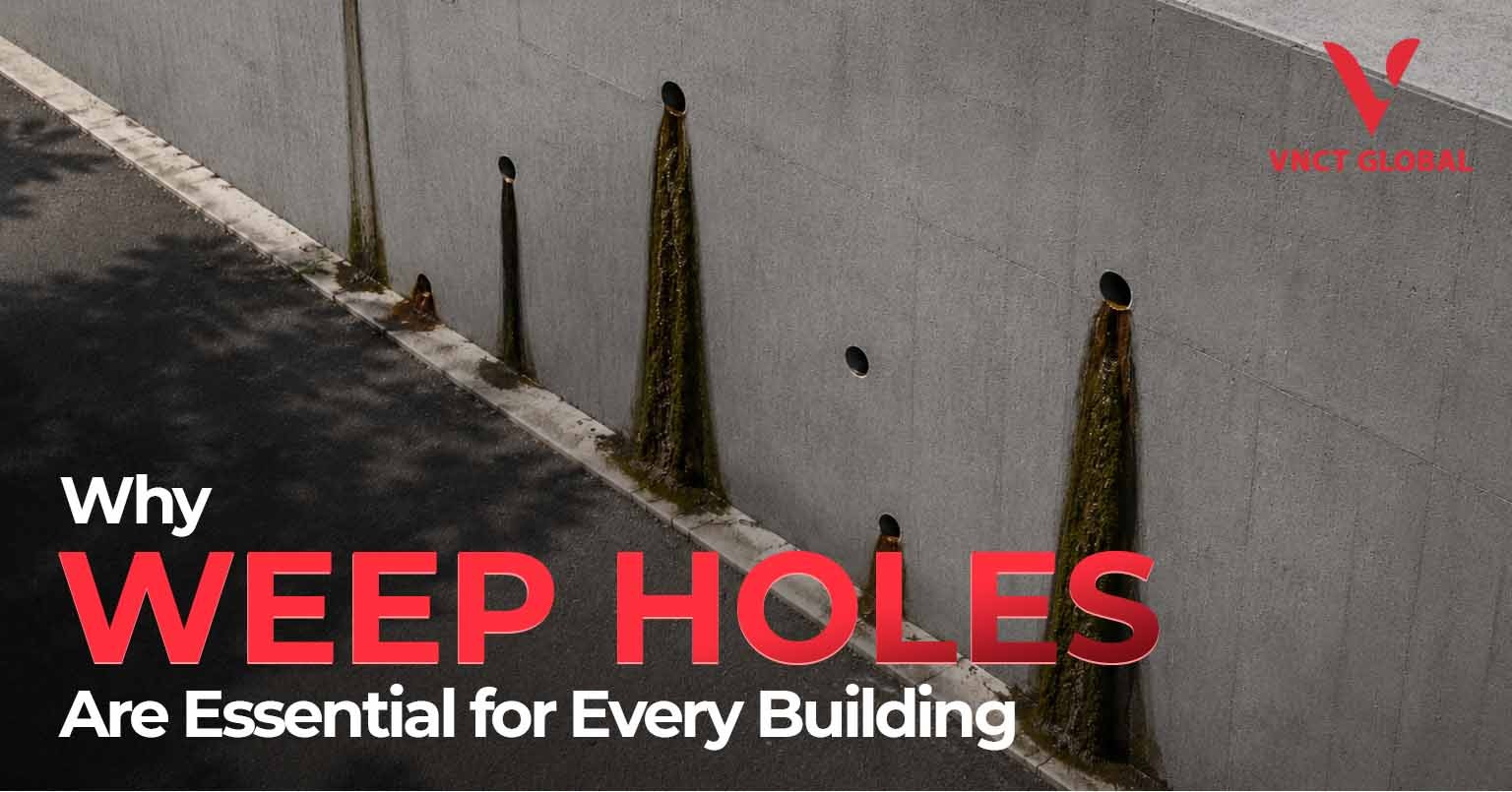
Weep Holes are small openings intentionally provided in walls, retaining walls, windows, and masonry structures to allow trapped water to drain out. They prevent moisture buildup, reduce hydrostatic pressure, improve ventilation, and protect buildings from structural damage, mold, and dampness. Properly designed weep holes significantly improve the lifespan of residential and commercial buildings by ensuring water never remains trapped inside construction elements.
What Are Weep Holes?
A weep hole is a small opening intentionally created at the base of masonry walls, cavity walls, retaining walls, windows, and other structural elements. Its primary function is simple allow trapped water to escape before it causes damage.
Buildings constantly face moisture from rain, humidity, groundwater, condensation, irrigation systems, and even daily weather changes. No waterproofing system is perfect throughout the life of a building. Small amounts of moisture can still enter wall cavities. Weep holes provide an exit path for this moisture.
Instead of allowing water to remain trapped inside the wall, these openings direct it outside, helping maintain a dry internal structure.
Think of them as the drainage outlets of your home’s walls.
Without these openings, moisture accumulates slowly, leading to issues that may not become visible for several years.
Why Are Weep Holes So Important?
Many structural failures begin with something as simple as trapped moisture.
Water is one of the biggest enemies of buildings. Even a small amount of moisture retained over time can lead to expensive repairs.
Properly designed weep holes help by:
- Removing trapped rainwater
- Reducing hydrostatic pressure
- Preventing damp walls
- Reducing mold formation
- Preventing brick deterioration
- Improving wall ventilation
- Protecting insulation
- Increasing building lifespan
- Preventing paint peeling
- Minimizing repair costs
These benefits explain why architects and structural engineers consider weep holes a standard requirement in many masonry constructions.
How Do Weep Holes Work?
The concept behind weep holes is surprisingly straightforward.
When rainwater penetrates the outer layer of a wall, it enters the cavity behind the masonry. Gravity naturally pulls this water downward.
Instead of collecting at the base, the water exits through strategically placed weep holes.
The process works in four stages:
Stage 1 – Moisture Enters
Rainwater reaches the external brick or stone surface.
Tiny amounts of water pass through mortar joints or microscopic pores.
Stage 2 – Water Collects
The moisture reaches the cavity between the exterior and interior wall.
This cavity acts as a drainage channel rather than allowing moisture to spread inward.
Stage 3 – Water Moves Downward
Gravity causes the collected water to travel downward.
Flashing systems installed inside the wall direct the water toward the base.
Stage 4 – Water Escapes
Finally, the moisture exits safely through the weep holes.
The wall remains dry and structurally healthy.
Understanding Wall Cavities
Modern cavity walls consist of two separate layers.
The outer layer protects against weather.
The inner layer supports interiors.
Between them lies a small cavity.
This cavity isn’t empty by accident.
Its purpose includes:
- Moisture drainage
- Thermal insulation
- Improved ventilation
- Reduced heat transfer
- Increased energy efficiency
Without weep holes, this cavity could become a reservoir for trapped water.
Components That Work Together with Weep Holes
Weep holes are only one part of a complete moisture management system.
Other important components include:
Flashing
Flashing is a waterproof membrane installed inside walls.
It collects moisture and channels it toward weep holes.
Without flashing, water may not reach the drainage openings efficiently.
Drainage Cavity
This open space provides room for water to travel downward.
It also improves airflow inside the wall.
Mortar Collection Device
During construction, excess mortar may fall inside the cavity.
Mortar collection devices prevent this material from blocking drainage.
Ventilation
Many weep holes also improve airflow.
Air circulation accelerates drying inside the wall cavity.
Types of Weep Holes
Builders use several kinds of weep holes depending on construction requirements.
Open Head Joint Weep Holes
These are among the most common.
A vertical mortar joint is intentionally left open.
Advantages include:
- Low cost
- Easy installation
- Effective drainage
- Good ventilation
Tube Weep Holes
Small plastic tubes are embedded within mortar joints.
Benefits include:
- Clean appearance
- Controlled drainage
- Suitable for decorative walls
However, they may clog more easily if not maintained.
Cotton Rope Weep Holes
During construction, cotton ropes absorb moisture and guide water outward.
After construction, the rope naturally deteriorates, leaving a drainage channel.
This technique is less common today but is still found in certain masonry practices.
Wick Weep Holes
Synthetic wicks transport moisture from inside the wall to the exterior.
These are generally used in specialized masonry systems.
Plastic Vent Weep Systems
Modern buildings increasingly use plastic vent inserts.
Advantages include:
- Better ventilation
- Insect protection
- Improved aesthetics
- Reduced clogging
Materials Used in Weep Hole Systems
Different materials are selected based on climate, wall design, and construction standards.
Common materials include:
- PVC
- High-density polyethylene
- Stainless steel vents
- Plastic mesh
- Cotton rope
- Synthetic fibers
- Metal screens
Each material offers different durability and maintenance characteristics.
Why Weep Holes Matter More in Tropical Climates
Countries with high humidity and seasonal rainfall require efficient moisture management.
In regions like Tamil Nadu, changing weather conditions expose buildings to:
- Heavy monsoon rain
- High humidity
- Strong sunlight
- Temperature fluctuations
These conditions increase the likelihood of moisture entering masonry structures.
This is why reputable builders pay close attention to waterproofing and drainage systems. Homebuyers evaluating projects from the largest villa developers in india often look beyond the visible finishes and ask about engineering details such as drainage provisions, waterproofing membranes, and wall cavity design. These seemingly small features can make a significant difference in reducing maintenance over the years.
Weep Holes in Modern Villa Construction
Luxury homes are designed to deliver comfort, durability, and low maintenance. Whether it’s premium villas in chennai, serene villas in madurai, or thoughtfully planned villas in coimbatore, construction quality depends on much more than elegant elevations or premium materials.
Modern villa developments increasingly incorporate moisture-control systems, proper site grading, drainage networks, and correctly positioned weep holes to help protect walls from long-term water damage. Buyers comparing projects from the best villa developers in india often find that attention to these engineering details reflects a commitment to quality that extends beyond aesthetics.
Where Should Weep Holes Be Installed?
One of the most common questions homeowners ask is whether weep holes are required throughout a building or only in specific locations. The answer depends on the construction type, wall design, and the likelihood of water accumulation.
Architects and structural engineers typically specify weep holes in areas where moisture is expected to collect. These openings provide a controlled drainage path, preventing water from remaining trapped within the structure.
Below are the most common locations where weep holes are installed.
Brick Cavity Walls
Brick cavity walls are the most common place to find weep holes.
A cavity wall consists of two separate layers:
- Outer brick wall
- Inner structural wall
Between these two layers is a narrow cavity that helps improve insulation and manage moisture.
When rainwater passes through the outer brick layer, it enters the cavity instead of reaching the interior walls. Gravity causes the water to flow downward, where flashing directs it toward the weep holes located at the bottom of the wall.
Without weep holes, the cavity can gradually fill with water, leading to damp interiors, staining, and long-term structural issues.
Retaining Walls
Retaining walls hold back soil, which naturally contains moisture. During heavy rain, the soil becomes saturated, increasing the pressure exerted on the wall.
This pressure, known as hydrostatic pressure, can weaken the retaining wall if water is not allowed to escape.
Weep holes reduce this pressure by providing an outlet for trapped water.
Benefits include:
- Reduced hydrostatic pressure
- Improved structural stability
- Prevention of wall bulging
- Reduced cracking
- Longer wall lifespan
Without proper drainage, even a well-built retaining wall may eventually fail.
Window Openings
Windows are another area where moisture can accumulate.
Rainwater may enter around the edges of window frames despite proper sealing. Weep holes at the base of window frames allow this water to drain before it seeps into interior walls.
Modern aluminum and uPVC windows often include built-in weep holes as part of their drainage system.
Keeping these openings clear helps prevent:
- Water stains
- Frame corrosion
- Mold around windows
- Interior dampness
- Paint damage
Door Frames
Exterior doors are constantly exposed to weather.
Small amounts of water may collect beneath thresholds during heavy rain. Proper drainage openings prevent moisture from remaining trapped under the frame.
This helps protect both the flooring and the surrounding masonry.
Foundation Walls
Below-ground walls are exposed to groundwater throughout the year.
Drainage systems combined with weep holes help reduce water pressure against basement walls and foundation structures.
This improves overall building durability.
Garden Boundary Walls
Boundary walls often experience repeated exposure to irrigation systems, rainwater, and changing weather conditions.
Installing weep holes improves drainage and minimizes water retention inside the wall.
This is particularly important for long compound walls where trapped moisture can lead to cracks over time.
Why Proper Placement Matters
Simply having weep holes is not enough.
They must be installed:
- At the correct height
- At proper spacing
- Along flashing lines
- At the lowest drainage points
- Without mortar blockage
Incorrect placement reduces their effectiveness significantly.
How Far Apart Should Weep Holes Be?
The spacing of weep holes depends on the wall design, local building codes, and engineering recommendations.
In many masonry projects, weep holes are commonly placed at regular intervals along the base of cavity walls to ensure efficient drainage.
Rather than relying on a fixed rule for every project, builders should follow the structural drawings and applicable construction standards to determine the correct spacing and positioning.
How Big Are Weep Holes?
Although small, they are carefully designed.
Typical openings are large enough to:
- Allow water drainage
- Improve airflow
- Prevent blockage
- Minimize insect entry (when fitted with vents or screens)
Oversized holes may affect appearance and allow pests to enter, while undersized openings can clog easily.
What Happens If There Are No Weep Holes?
Buildings without adequate drainage may experience several moisture-related issues over time.
Damp Walls
Water trapped inside masonry eventually reaches interior surfaces.
Common symptoms include:
- Wet patches
- Paint peeling
- Wallpaper damage
- Discoloration
Mold Growth
Moisture creates ideal conditions for mold.
Besides damaging finishes, mold can also affect indoor air quality and produce unpleasant odors.
Brick Deterioration
Repeated wetting and drying weakens bricks and mortar.
Over time, this may result in:
- Cracked mortar joints
- Surface flaking
- Loose bricks
- Structural repairs
Interior Damage
Moisture can eventually affect:
- Wooden furniture
- Flooring
- Electrical installations
- False ceilings
- Decorative finishes
Repairing interior water damage is often much more expensive than preventing it.
Common Mistakes During Installation
Even experienced contractors can make mistakes if proper supervision is lacking.
Blocking the Weep Holes
One of the most frequent errors occurs when excess mortar falls into the cavity and blocks the drainage path.
If water cannot reach the opening, the weep hole becomes ineffective.
Incorrect Flashing Installation
Flashing should direct water toward the drainage openings.
Improper flashing can cause water to collect inside the wall instead of exiting.
Covering the Openings
After construction, homeowners sometimes unknowingly block weep holes with:
- Landscaping
- Decorative plaster
- Paint
- Soil
- Concrete paving
This prevents water from escaping.
Poor Wall Cavity Design
If the cavity is filled with mortar or debris, water cannot flow freely.
Proper cavity cleaning during construction is essential.
Can Weep Holes Become Blocked?
Yes.
Over time, debris may accumulate inside the openings.
Common causes include:
- Dust
- Insects
- Spider webs
- Leaves
- Mortar residue
- Plant roots
- Paint
- Soil
Regular inspection helps identify blockages before they become a problem.
How to Maintain Weep Holes
Fortunately, maintenance is simple.
Inspect Annually
Check each opening for visible blockages, especially before and after the monsoon season.
Keep Landscaping Away
Avoid piling soil, mulch, or plants directly against exterior walls where they can obstruct drainage.
Avoid Sealing the Holes
Do not fill or cover weep holes during repainting, plaster repairs, or renovation work.
Remove Debris Carefully
Use a soft brush or compressed air to clear light debris. If you suspect a deeper blockage, consult a qualified professional rather than inserting sharp objects into the wall.
Weep Holes and Waterproofing
Some people assume that waterproof coatings eliminate the need for weep holes.
In reality, the two systems serve different purposes.
Waterproofing aims to reduce water penetration, while weep holes provide a safe escape route for any moisture that still enters the wall. Used together, they form a comprehensive moisture management system that helps protect the building over the long term.
Why Quality Construction Makes a Difference
Every homeowner wants a property that remains durable with minimal maintenance. Achieving this depends on both visible craftsmanship and hidden engineering details.
Features such as cavity wall design, waterproof membranes, flashing systems, proper drainage, and correctly installed weep holes all contribute to the long-term performance of a home.
When evaluating residential projects, many buyers consider developers who consistently emphasize construction quality and engineering standards. This is one reason projects by the largest villa developers in india often attract attention from buyers seeking homes built for durability as well as comfort.
For anyone planning to invest in villas in chennai, villas in madurai, or villas in coimbatore, asking about moisture protection systems is just as important as reviewing floor plans or amenities. Understanding how drainage, waterproofing, and wall ventilation have been incorporated can provide greater confidence in the property’s long-term value.
Choosing a Home Built for the Future
A beautiful home should also be designed to withstand years of changing weather. Attention to construction details—including effective drainage systems and weep holes—helps reduce maintenance costs and protect the structure over time.
For prospective buyers comparing different developments, it is worthwhile to ask about the engineering practices followed during construction rather than focusing only on finishes. Reputable developers who invest in these details often deliver homes that perform better in the long run, which is one of the qualities associated with the best villa developers in india.
What Should NRIs Check Before Buying a Villa?
Buying a villa from overseas can be challenging, especially if you cannot inspect the property in person. A structured checklist can make the process much easier.
1. Construction Quality
Ask about:
- Structural design
- Foundation work
- Waterproofing methods
- Drainage systems
- Masonry quality
- Installation of weep holes
- Roofing system
A developer that is transparent about construction practices generally inspires greater confidence.
2. Documentation
Ensure all legal documents are available and verified, including:
- Land ownership records
- Building approvals
- Completion certificates (where applicable)
- Property tax records
- Utility connections
3. Location
Evaluate factors such as:
- Connectivity
- Schools
- Hospitals
- Shopping centres
- Future infrastructure developments
A good location supports both comfortable living and long-term appreciation.
4. Maintenance
For NRIs, a well-managed community can be a significant advantage. Look for information about:
- Security
- Landscaping
- Waste management
- Common area maintenance
- Drainage upkeep
Proper maintenance helps preserve the value of the property over time.
How VNCT Global Supports NRI Homebuyers
Buying a property from another country requires more than selecting the right project. NRIs often need assistance with documentation, communication, progress updates, and post-purchase support.
VNCT Global focuses on making this journey more convenient by providing guidance throughout the property-buying process. The objective is to help overseas buyers remain informed and connected, even when they are unable to visit India frequently.
Depending on the project and buyer’s requirements, support may include:
- Project consultations
- Virtual property presentations
- Construction progress updates
- Assistance with documentation
- Coordination during the purchase process
- Information about available villa communities
- Guidance for property handover
This approach helps many NRIs make confident decisions while managing the purchase remotely.
Exploring Premium Villa Communities
Every homeowner has different lifestyle preferences. Some prioritize city connectivity, while others prefer peaceful surroundings or resort-inspired living.
Several thoughtfully planned communities offer a blend of comfort, design, and modern amenities.
Brookside Residences
Brookside Residences is designed to provide a balanced lifestyle with carefully planned spaces, landscaped surroundings, and modern infrastructure. Buyers often appreciate communities that combine aesthetic appeal with practical engineering features.
Palm Shore
Palm Shore emphasizes contemporary living with open spaces and a pleasant residential environment. Homes that integrate effective drainage systems and quality construction materials are generally better equipped to withstand seasonal weather conditions.
Palm Beach
Palm Beach reflects a lifestyle focused on comfort and convenience. As with any residential development, construction quality—including moisture management and structural detailing—plays an important role in maintaining the property’s long-term value.
Creek Residences
Creek Residences offers a community-oriented living experience where thoughtful planning extends beyond architecture. Reliable drainage infrastructure and durable building practices contribute to a more resilient residential environment.
Park Villas
Park Villas combines modern design with practical functionality. Buyers increasingly look for projects that pay attention to engineering details, helping reduce maintenance requirements while improving the longevity of the homes.
Ocean Drive Villas
Ocean Drive Villas showcases the importance of designing homes that can perform well under varying weather conditions. In locations that experience humidity or heavy rainfall, proper moisture control systems—including well-designed weep holes—are particularly valuable.
Why Choose VNCT Global?
Purchasing a villa is one of life’s most significant investments, and having reliable guidance throughout the process can make a meaningful difference.
VNCT Global is committed to helping homebuyers and NRIs navigate their property journey with confidence. From sharing project information and construction updates to assisting with documentation and customer support, the goal is to simplify the experience and provide transparency at every stage.
Whether you’re exploring premium villa communities, seeking investment opportunities, or planning your future home in India, the team strives to make the buying process smooth and well-informed.
If you would like to learn more about available projects or receive assistance tailored to your requirements, contact us VNCT Global to speak with the team.
Conclusion
At first glance, Weep Holes may appear to be nothing more than small openings in a wall, but they serve a vital purpose in protecting buildings from one of construction’s greatest challenges—moisture.
By allowing trapped water to drain efficiently, they help reduce hydrostatic pressure, prevent dampness, minimize mold growth, preserve masonry, and extend the lifespan of residential and commercial buildings. When combined with quality waterproofing, flashing, proper ventilation, and sound engineering practices, weep holes form an essential part of a durable and resilient structure.
For homeowners, investors, and especially NRIs purchasing property from abroad, understanding these hidden construction details can make a significant difference. A well-built home is defined not only by its appearance but also by the systems that protect it over the years.
If you’re considering premium villas in chennai, villas in madurai, or villas in coimbatore, take the time to evaluate the construction quality behind the finishes. Asking about drainage systems, waterproofing, and moisture management reflects a practical approach to safeguarding your investment.
Whether you’re exploring thoughtfully planned communities like Brookside Residences, Palm Shore, Palm Beach, Creek Residences, Park Villas, or Ocean Drive Villas, understanding the engineering behind the walls helps you make informed decisions with confidence.
For expert guidance, personalized assistance, and support throughout your property-buying journey, contact us VNCT Global and discover how VNCT Global can help you find a home built for lasting comfort, durability, and peace of mind.
FAQ for Weep Holes
What are weep holes?
Weep holes are small openings provided in masonry walls, retaining walls, and window systems to allow trapped water to drain safely from the structure.
Why are weep holes important?
They help prevent moisture buildup, reduce hydrostatic pressure, improve ventilation, and protect buildings from dampness and structural damage.
Where are weep holes commonly installed?
They are commonly installed in brick cavity walls, retaining walls, window frames, door frames, and certain foundation systems.
Can weep holes become blocked?
Yes. Dust, insects, mortar, leaves, soil, or paint can obstruct them if they are not inspected periodically.
How often should I inspect weep holes?
A visual inspection at least once or twice a year—particularly before and after the monsoon season—is generally recommended.
Should I seal weep holes?
No. They are designed to remain open so water can drain effectively.
Can insects enter through weep holes?
Modern vent inserts and mesh screens help reduce insect entry while still allowing proper drainage.
Do all buildings require weep holes?
Not every building requires them in every location. Their use depends on the wall system, construction design, and applicable building standards.