Table of Contents
AI Overview
Basement Waterproofing Methods are techniques used to stop water from entering a basement through walls, floors, joints, and foundations. The most effective methods include exterior waterproofing membranes, interior drainage systems, crack injection, sump pumps, foundation coatings, French drains, and proper grading around the property. Choosing the right solution depends on the source of moisture, soil conditions, climate, and the age of the building. Proper waterproofing not only protects your home’s structure but also improves indoor air quality, increases property value, and reduces long-term maintenance costs.
Introduction
Water damage is one of the most common and expensive problems homeowners face, making Basement Waterproofing Methods an essential consideration for anyone building, buying, or maintaining a home. A dry basement is more than just a storage space it protects your home’s structural integrity, prevents mold growth, preserves indoor air quality, and adds lasting value to your property. Whether you’re constructing a new home or dealing with persistent leaks in an older one, understanding the right waterproofing approach can save significant time, money, and stress in the future.
Modern construction practices have evolved considerably, and today’s waterproofing systems are designed to provide long-term protection against groundwater pressure, seasonal rainfall, and moisture infiltration. Instead of waiting until visible cracks or damp patches appear, investing in preventive waterproofing during construction is often the smartest and most cost-effective choice.
If you’re planning to invest in premium residential properties developed by the best villa developers in india, waterproofing should be one of the first construction quality factors you evaluate. Reputed builders prioritize foundation protection because it directly impacts the lifespan and durability of every home.
What is Basement Waterproofing?
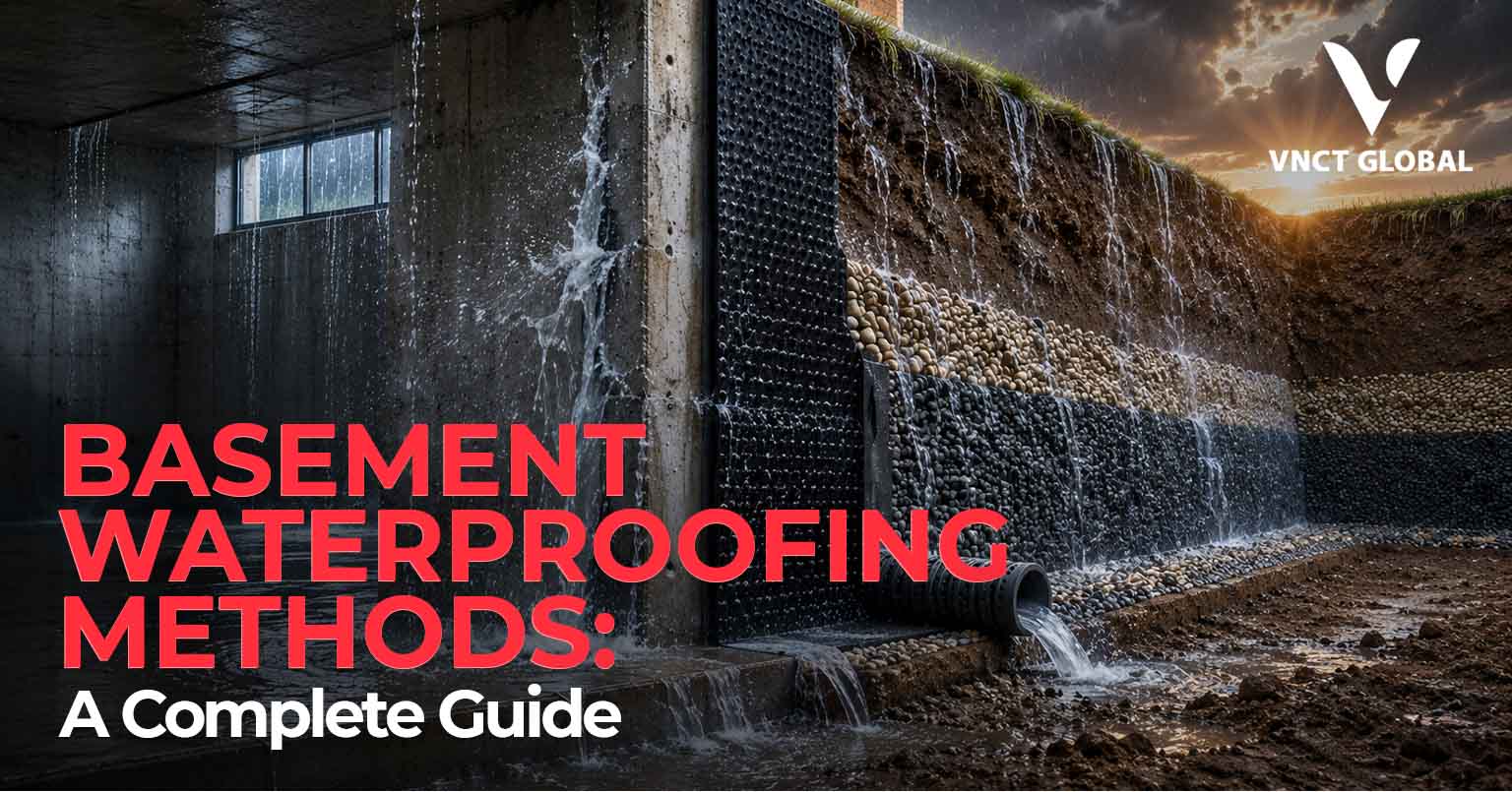
Basement waterproofing is the process of preventing groundwater, rainwater, and moisture from entering below-ground spaces through walls, floors, expansion joints, and foundation cracks. Since basements are located below the surface level, they are constantly exposed to soil moisture and hydrostatic pressure.
Without proper waterproofing, water gradually seeps into the concrete through microscopic pores and cracks. Over time, this can result in:
- Damp walls
- Mold and mildew
- Peeling paint
- Rusting reinforcement steel
- Foundation deterioration
- Musty odors
- Flooring damage
- Reduced property value
Modern waterproofing systems combine multiple protective layers rather than relying on a single coating. A complete system may include drainage boards, waterproof membranes, sealants, sump pumps, and efficient surface drainage.
Why Basement Waterproofing Matters
Many homeowners underestimate the importance of waterproofing because the effects often develop gradually. A small damp patch today can become a significant structural repair project within a few years.
Here are some of the biggest benefits of investing in professional basement waterproofing.
Protects Structural Integrity
Water slowly weakens concrete and corrodes steel reinforcement. As moisture penetrates the foundation, it can cause expansion, cracking, and settlement. Effective waterproofing helps maintain the strength and stability of the entire structure.
Prevents Mold Growth
Moisture creates an ideal environment for mold and mildew. These organisms can spread rapidly across walls, ceilings, carpets, and stored belongings.
Besides damaging interiors, mold spores may affect indoor air quality and trigger allergies or respiratory issues.
Increases Property Value
Homes with dry, well-maintained basements generally command higher resale values. Buyers often inspect basements carefully because moisture issues can indicate larger structural concerns.
Whether you’re purchasing a family residence or exploring projects from the largest villa developers in india, a professionally waterproofed foundation is a sign of quality construction and long-term durability.
Reduces Maintenance Costs
Ignoring water problems often leads to repeated repairs, repainting, flooring replacement, and mold remediation.
Preventive waterproofing costs considerably less than repairing long-term structural damage.
Improves Indoor Comfort
A dry basement reduces humidity throughout the home.
Benefits include:
- Better indoor air quality
- Less condensation
- Improved HVAC efficiency
- Reduced odors
- More usable living space
Common Causes of Basement Water Problems
Water infiltration rarely has a single cause. In most cases, several factors work together.
Heavy Rainfall
During monsoon seasons, saturated soil exerts pressure against basement walls. If waterproofing is inadequate, water finds its way inside through joints and cracks.
Poor Surface Drainage
Improper grading causes rainwater to collect near the foundation rather than flowing away.
Standing water significantly increases hydrostatic pressure.
Foundation Cracks
Even hairline cracks can become entry points for groundwater.
Cracks may develop due to:
- Soil movement
- Foundation settlement
- Shrinkage during curing
- Earthquakes
- Temperature changes
Clogged Gutters
Overflowing gutters discharge water directly beside the foundation.
Repeated exposure gradually increases moisture penetration.
High Water Table
Some regions naturally have groundwater close to the surface.
During rainy seasons, the groundwater level rises and pushes moisture toward basement walls.
Poor Construction Practices
Low-quality materials or improper installation often lead to waterproofing failure.
Examples include:
- Inadequate concrete curing
- Thin waterproof coatings
- Missing drainage layers
- Improper sealing around pipes
- Poor expansion joint treatment
This is why choosing experienced developers is essential. Homebuyers researching the best villa developers in india should always ask about waterproofing specifications, foundation engineering, and construction quality before making an investment.
Signs Your Basement Needs Waterproofing
Water damage usually starts subtly before becoming obvious.
Watch for these warning signs.
Damp Walls
Walls that remain cool and damp even during dry weather indicate moisture intrusion.
White Powder Deposits
A chalky white substance on concrete walls is called efflorescence.
It forms when water carries mineral salts through masonry surfaces.
Musty Odors
Persistent earthy smells often indicate hidden moisture and mold growth.
Cracks
Cracks wider than a few millimeters should always be inspected by professionals.
Not every crack is dangerous, but they should never be ignored.
Peeling Paint
Moisture behind painted surfaces causes bubbling, blistering, and peeling.
Water Stains
Brown or yellow stains often indicate recurring leaks.
Standing Water
Puddles after heavy rain are a clear sign that waterproofing or drainage systems require attention.
Understanding How Water Enters a Basement
To choose the right solution, it’s important to understand how water moves through the ground.
Concrete is often perceived as completely solid, but it actually contains tiny pores that allow moisture to pass through over time.
Water reaches basements in three primary ways.
Hydrostatic Pressure
This is the most common cause of basement leaks.
When soil becomes saturated after rain, water builds pressure against the foundation.
Eventually, the pressure forces water through:
- Concrete pores
- Expansion joints
- Floor joints
- Wall cracks
Capillary Action
Concrete behaves like a sponge.
Tiny pores pull moisture upward through capillary action, allowing dampness to travel into walls and floors.
Surface Water
Poor drainage directs rainwater toward the foundation.
Without proper grading, even moderate rainfall can create recurring moisture problems.
Types of Basement Waterproofing Methods
There is no universal waterproofing solution. The best approach depends on factors such as the building’s age, soil conditions, local climate, and the severity of water intrusion.
The most effective Basement Waterproofing Methods generally fall into two broad categories:
- Exterior waterproofing
- Interior waterproofing
Many modern homes use a combination of both to achieve maximum protection.
Exterior Waterproofing
Exterior waterproofing is widely regarded as the most reliable method because it prevents water from reaching the foundation walls in the first place.
Instead of managing leaks after they occur, this approach creates a protective barrier around the structure.
The process typically involves:
- Excavating around the foundation
- Cleaning foundation walls
- Repairing cracks
- Applying waterproof membranes
- Installing drainage boards
- Backfilling with appropriate materials
Although exterior waterproofing requires more effort during installation, it provides excellent long-term performance.
It is especially recommended for newly constructed homes and luxury villas where long-term durability is a priority.
Developers known among the largest villa developers in india often integrate advanced exterior waterproofing systems during the construction phase to minimize future maintenance and protect
Benefits of Exterior Waterproofing
Exterior waterproofing offers several advantages over temporary repairs.
Some of the most important benefits include:
- Stops water before it enters the structure
- Protects foundation walls
- Reduces hydrostatic pressure
- Extends building lifespan
- Prevents mold formation
- Minimizes repair costs
- Improves property value
- Enhances long-term structural stability
Interior Basement Waterproofing Methods
While exterior waterproofing prevents water from reaching the foundation, interior waterproofing focuses on managing moisture that has already entered or may enter the basement. In many existing homes, excavation around the foundation is either impractical or too expensive. In such cases, interior systems offer an effective and economical solution.
Interior waterproofing does not replace exterior protection in every situation, but it significantly reduces water damage and helps maintain a dry, healthy basement when combined with proper drainage and ventilation.
Interior Waterproofing Systems
The most common interior waterproofing methods include:
- Interior drainage channels
- Waterproof wall coatings
- Crack injection systems
- Vapor barriers
- Basement floor drainage
- Sump pump installations
- Interior French drains
These systems work together to redirect water safely away from the home while protecting walls and flooring from moisture damage.
Waterproof Wall Coatings
One of the simplest Basement Waterproofing Methods involves applying waterproof coatings directly to interior concrete or masonry walls.
These coatings create a protective barrier that limits moisture penetration through porous surfaces.
Common coating materials include:
- Cementitious waterproof coatings
- Acrylic waterproof coatings
- Elastomeric coatings
- Polymer-modified waterproof paints
Although coatings are useful for minor dampness, they should not be considered a permanent solution for significant groundwater pressure.
| Advantages | Limitations |
| Easy application | Does not stop structural cracks |
| Cost-effective | Less effective against heavy water pressure |
| Improves wall appearance | Requires proper surface preparation |
| Reduces minor seepage | Periodic maintenance may be necessary |
| Helps control humidity | – |
Cementitious Waterproofing
Cementitious waterproofing remains one of the oldest and most reliable waterproofing techniques.
It consists of cement-based compounds mixed with specialized waterproofing additives that bond directly to concrete surfaces.
This method is commonly used in:
- Basement walls
- Lift pits
- Water tanks
- Foundations
- Utility rooms
- Retaining walls
Benefits
- Strong adhesion
- Easy application
- Suitable for concrete structures
- Low maintenance
- Long service life
Its durability makes it a preferred solution in residential and commercial developments.
Bituminous Waterproofing
Bituminous waterproofing uses asphalt-based compounds to create a flexible waterproof membrane around foundation surfaces.
The coating remains flexible even with minor structural movement, reducing the risk of cracks developing over time.
Bituminous waterproofing is widely used for:
- Foundation walls
- Basement slabs
- Underground structures
- Parking basements
Advantages
- Excellent water resistance
- Good flexibility
- Long lifespan
- Strong adhesion
- Resistant to soil moisture
Many premium residential developments include bituminous membranes as part of their multi-layer waterproofing systems.
Liquid Waterproof Membranes
Liquid membranes have become increasingly popular because they provide seamless waterproof protection.
Unlike sheet membranes, liquid coatings form a continuous layer without joints or seams.
They are typically made from:
- Polyurethane
- Acrylic
- Rubberized polymers
- Hybrid elastomers
After curing, the membrane stretches with minor structural movement while maintaining waterproof protection.
Where They Are Used
Sheet Membrane Waterproofing
Sheet membranes consist of factory-manufactured waterproof sheets that are installed over the exterior foundation.
These membranes are available in:
- HDPE sheets
- PVC membranes
- Rubber membranes
- Self-adhesive waterproof sheets
Since they are manufactured under controlled conditions, they provide consistent thickness and high durability.
Advantages
- Uniform waterproof layer
- High puncture resistance
- Excellent lifespan
- Reliable performance
- Ideal for new construction
Proper installation is essential because poorly sealed joints can become potential leak points.
Bentonite Waterproofing
Bentonite is a naturally occurring clay that expands significantly when it comes into contact with water.
This expansion allows it to seal small cracks, gaps, and joints automatically.
Bentonite waterproofing is frequently used in:
- Underground basements
- Tunnel construction
- Foundation walls
- Retaining structures
Its self-sealing capability makes it particularly useful in areas with high groundwater levels.
Crystalline Waterproofing
Crystalline waterproofing is one of the most advanced Basement Waterproofing Methods available today.
Instead of creating only a surface barrier, crystalline chemicals penetrate deep into concrete.
When exposed to water, these chemicals react with free lime inside the concrete to form microscopic crystals.
These crystals permanently block water pathways while still allowing the concrete to breathe.
Benefits
- Permanent protection
- Self-healing of tiny cracks
- Deep penetration
- Long-lasting performance
- Suitable for positive and negative water pressure
Crystalline waterproofing is increasingly specified in high-performance residential and commercial projects due to its exceptional durability.
Polyurethane Crack Injection
Foundation cracks are one of the most common causes of basement leaks.
Polyurethane injection repairs these cracks by injecting expanding resin under pressure.
As the material expands, it fills voids and prevents water from passing through.
This method works well for:
- Active water leaks
- Basement wall cracks
- Construction joints
- Cold joints
Advantages
- Fast repair
- Minimal excavation
- Stops active leaks
- Flexible after curing
Epoxy Crack Injection
Unlike polyurethane, epoxy creates a rigid structural bond.
It is mainly used when restoring structural strength rather than sealing moving cracks.
Epoxy is suitable for:
- Structural concrete repairs
- Load-bearing walls
- Foundation restoration
Choosing between epoxy and polyurethane depends on whether the crack is structural or caused by moisture movement.
Interior Drainage Systems
Interior drainage systems are designed to collect groundwater before it spreads across the basement floor.
Water entering through walls or floor joints flows into drainage channels installed around the basement perimeter.
The collected water is then directed toward a sump pit.
From there, it is safely discharged outside using a sump pump.
This approach is highly effective for existing homes experiencing recurring seepage.
French Drain Systems
A French drain is one of the most popular drainage solutions used in basement waterproofing.
It consists of:
- A trench
- Perforated drainage pipe
- Filter fabric
- Washed gravel
Water naturally flows into the gravel, enters the perforated pipe, and is redirected away from the building.
Exterior French Drains
Installed around the outside foundation before backfilling.
Ideal during new construction.
Interior French Drains
Installed beneath the basement floor along the inside perimeter.
Excellent for existing homes where excavation is difficult.
Sump Pump Systems
A sump pump is often considered the heart of an interior waterproofing system.
Its primary function is to remove collected groundwater before it floods the basement.
The pump activates automatically when water inside the sump pit reaches a predetermined level.
Types of Sump Pumps
Pedestal Pumps
The motor remains above the pit.
Advantages:
- Easy maintenance
- Longer motor life
- Lower cost
Submersible Pumps
Installed completely inside the sump pit.
Advantages:
- Quiet operation
- Higher pumping capacity
- Better appearance
- Space-saving
For regions with frequent rainfall, installing a battery backup system ensures protection even during power outages.
Vapor Barriers
Water does not always enter as liquid.
Water vapor can also move through concrete walls and floors.
Vapor barriers prevent moisture from entering finished basement spaces.
Common materials include:
- Polyethylene sheets
- Reinforced plastic membranes
- Foil-backed insulation barriers
These barriers help protect:
- Drywall
- Wooden flooring
- Furniture
- Electrical systems
- Insulation
Drainage Boards
Drainage boards are installed against foundation walls before backfilling.
Their dimpled design creates an air gap that allows water to flow downward into perimeter drains.
Benefits include:
- Reduces hydrostatic pressure
- Protects waterproof membranes
- Improves drainage efficiency
- Extends waterproofing lifespan
Basement Waterproofing for Luxury Villas
Luxury homes often include entertainment rooms, private gyms, home theaters, wine cellars, guest suites, and dedicated storage areas within basement spaces. Protecting these valuable areas requires waterproofing systems that go beyond basic construction standards.
Homebuyers exploring villas in chennai, villas in madurai, or villas in coimbatore should always ask builders about the waterproofing technologies used beneath the structure. A premium home deserves premium protection, and quality waterproofing is an investment that safeguards both comfort and long-term value.
Leading projects developed by the best villa developers in india typically incorporate advanced waterproofing solutions from the planning stage itself. From engineered drainage systems to high-performance membranes and crystalline concrete treatments, these measures help ensure that luxury homes remain safe and dry for decades.
Projects such as Brookside Residences, Palm Shore, Palm Beach, Creek Residences, Park Villas, and Ocean Drive Villas are examples of developments where buyers should evaluate construction quality, foundation engineering, drainage design, and waterproofing specifications alongside aesthetics and amenities.
Choosing the Right Basement Waterproofing Methods
Selecting the right Basement Waterproofing Methods is not simply about choosing the most expensive solution. The ideal waterproofing system depends on several factors, including the age of the building, soil conditions, groundwater levels, climate, foundation design, and the severity of existing water problems.
A professional inspection is always the first step. Waterproofing experts evaluate the source of moisture before recommending an appropriate solution. Treating only the visible symptoms without addressing the root cause often leads to recurring issues and unnecessary expenses.
Here are some key factors to consider before selecting a waterproofing method.
Age of the Building
Older buildings may already have foundation cracks, deteriorated waterproof coatings, or outdated drainage systems. In such cases, a combination of crack repair, interior drainage, and waterproof coatings may be required.
For newly constructed homes, installing a complete exterior waterproofing system during construction provides the best long-term protection.
Comparing Basement Waterproofing Methods
Every waterproofing solution has its strengths and ideal applications. Understanding the differences helps homeowners make informed decisions.
| Waterproofing Method | Best For | Durability | Maintenance |
| Exterior Membrane | New construction | Excellent | Low |
| Interior Drainage System | Existing homes | Excellent | Low |
| Cementitious Coating | Minor dampness | Good | Medium |
| Bituminous Coating | Foundations | Excellent | Low |
| Liquid Membrane | Complex surfaces | Excellent | Low |
| Sheet Membrane | Large foundations | Excellent | Low |
| French Drain | Groundwater management | Excellent | Low |
| Sump Pump | Flood prevention | Excellent | Moderate |
| Polyurethane Injection | Active leaks | Excellent | Low |
| Epoxy Injection | Structural cracks | Excellent | Low |
| Crystalline Waterproofing | Concrete protection | Excellent | Very Low |
In many cases, the most reliable results come from combining multiple methods rather than relying on a single solution.
How VNCT Global Supports NRI Homebuyers
Buying a home from another country requires transparency, clear communication, and dependable support. VNCT Global understands the unique needs of NRI customers and aims to simplify every stage of the property-buying journey.
From the initial enquiry to post-purchase assistance, the team works to provide timely updates, project information, and guidance so that buyers can make informed decisions with confidence.
Whether you’re exploring premium villas in chennai, villas in madurai, or villas in coimbatore, VNCT Global assists buyers by offering:
- Professional project consultation
- Virtual project presentations
- Detailed floor plans and specifications
- Construction progress updates
- Documentation guidance
- Investment-related support
- Customer assistance before and after purchase
Quality construction extends beyond beautiful architecture. Foundations, waterproofing systems, drainage planning, and structural engineering all contribute to the long-term performance of a home. This commitment to quality is one reason many homebuyers consider VNCT Global among the best villa developers in india.
If you would like to learn more about ongoing villa communities, pricing, construction quality, or investment opportunities, simply contact us vnct global and our team will be happy to assist you.
Premium Villa Communities
Every homeowner has different lifestyle preferences, but lasting quality begins with sound engineering. Premium residential communities are designed not only to provide modern amenities but also to deliver durability and peace of mind.
Some of the distinguished developments include:
- Brookside Residences
- Palm Shore
- Palm Beach
- Creek Residences
- Park Villas
- Ocean Drive Villas
When evaluating any premium community, always ask about:
- Foundation engineering
- Waterproofing systems
- Rainwater drainage
- Construction materials
- Structural warranties
- Long-term maintenance plans
These factors are just as important as location, clubhouse facilities, or architectural design.
Why Quality Construction Matters More Than Ever
A beautiful home should continue performing well for decades, not just during the first few years after construction.
Comprehensive Basement Waterproofing Methods help protect:
- Foundation walls
- Basement floors
- Structural concrete
- Steel reinforcement
- Interior finishes
- Furniture
- Electrical systems
- Indoor air quality
When waterproofing is incorporated into the original construction plan, homeowners benefit from lower maintenance costs and fewer unexpected repairs throughout the life of the property.
This attention to detail is one of the qualities buyers should look for when comparing projects from the largest villa developers in india.
VNCT Global and International Homebuyers
Many NRIs regularly visit India to meet family, inspect investments, or explore new residential projects. At the same time, events in dubai often provide opportunities for overseas buyers to connect with developers, learn about new launches, and understand the latest investment trends in India’s real estate market.
VNCT Global continues to engage with customers through multiple channels, helping overseas buyers stay informed about upcoming projects, construction progress, and investment opportunities. Whether you’re purchasing your first villa or expanding your property portfolio, access to reliable information and responsive customer support makes the buying process smoother.
Conclusion
A strong home begins with a strong foundation, and that foundation deserves the best possible protection. Choosing the right Basement Waterproofing Methods is one of the most effective ways to safeguard your property from moisture, structural damage, mold growth, and expensive repairs.
Whether you’re building a new home, renovating an existing basement, or purchasing a premium villa, waterproofing should never be treated as an optional upgrade. Instead, it should be viewed as an essential investment that protects your home for years to come.
If you’re searching for thoughtfully designed residential communities developed with quality construction standards, engineering excellence, and long-term durability in mind, explore projects by VNCT Global. From premium villas in chennai, villas in madurai, and villas in coimbatore to distinguished developments such as Brookside Residences, Palm Shore, Palm Beach, Creek Residences, Park Villas, and Ocean Drive Villas, every project reflects a commitment to quality and customer satisfaction.
As one of the largest villa developers in india, VNCT Global continues to focus on delivering homes that combine modern living with dependable construction practices. If you’re ready to learn more about current projects or investment opportunities, contact us vnct global and our team will be pleased to help you take the next step toward owning a home built for lasting value.
FAQ for Basement Waterproofing Methods
What are Basement Waterproofing Methods?
Basement Waterproofing Methods are techniques used to prevent groundwater and moisture from entering basement walls, floors, and foundations through membranes, coatings, drainage systems, and crack repairs.
Which waterproofing method is the most effective?
Exterior waterproofing combined with perimeter drainage and waterproof membranes is generally considered the most effective long-term solution.
Is interior waterproofing enough?
Interior waterproofing is highly effective for managing existing moisture issues, but combining interior and exterior systems provides the best protection whenever possible.
How long does basement waterproofing last?
Depending on the materials used and installation quality, professionally installed waterproofing systems can last 20 years or more, with many systems performing effectively for decades.
Can waterproofing stop mold growth?
Yes. By controlling moisture, waterproofing significantly reduces the conditions that allow mold and mildew to develop.
Can small foundation cracks cause leaks?
Yes. Even hairline cracks can allow groundwater to seep into a basement over time.
What is hydrostatic pressure?
Hydrostatic pressure is the force exerted by groundwater against basement walls and floors, often causing water infiltration if waterproofing is inadequate.
What is a French drain?
A French drain is a gravel-filled trench containing a perforated pipe that redirects groundwater away from the foundation.
Why is a sump pump important?
A sump pump removes collected groundwater from a sump pit, preventing basement flooding during heavy rainfall.