Table of Contents
Introduction
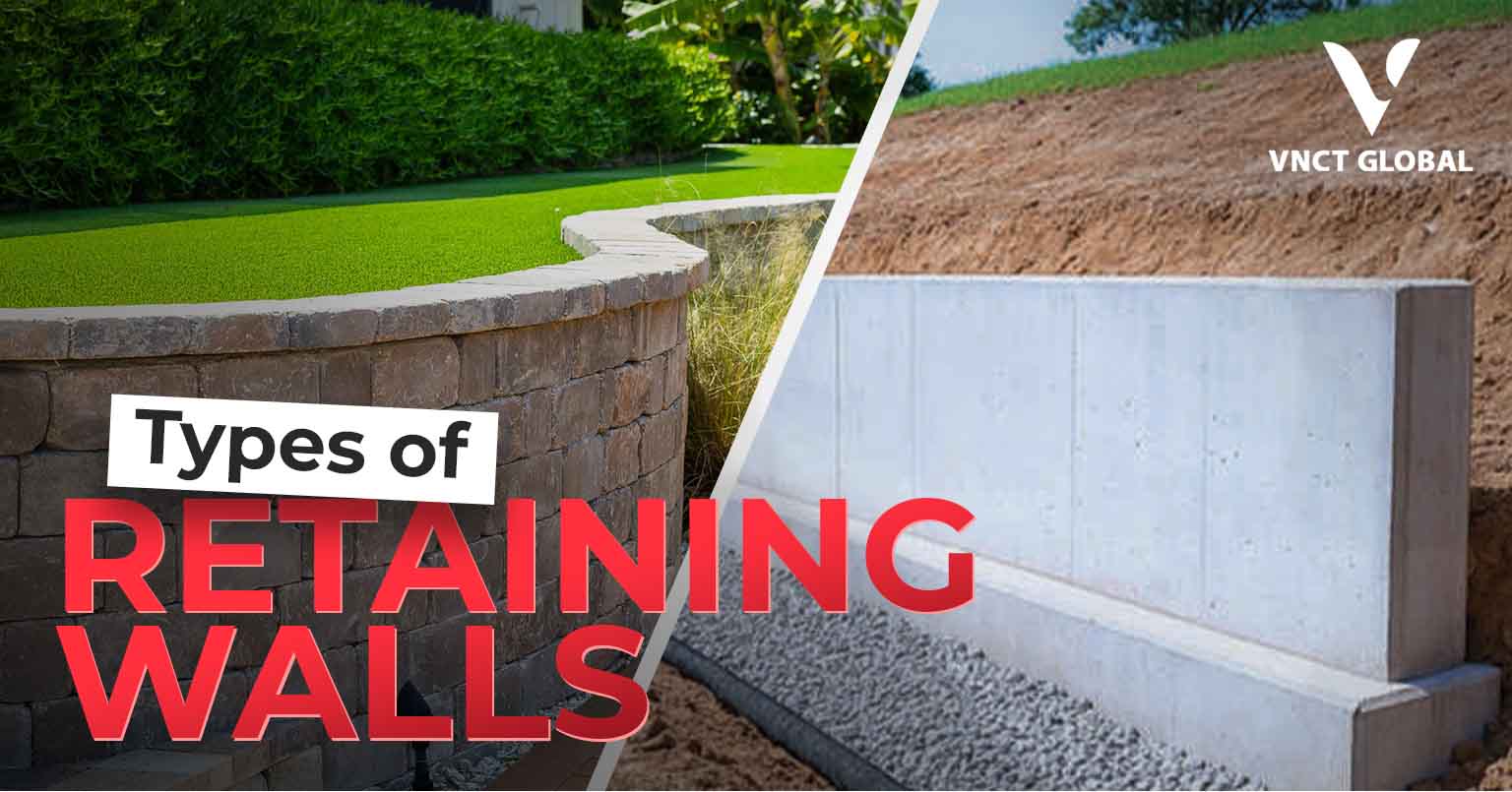
Understanding Retaining Walls is essential for anyone involved in construction, land development, landscaping, or property investment. Retaining walls are engineered structures designed to hold back soil, prevent erosion, manage slopes, and create usable land where natural terrain would otherwise make construction difficult. From residential villas and commercial buildings to highways and large infrastructure projects, retaining walls play a critical role in ensuring stability, safety, and long-term durability.
As urban development expands across India, particularly in rapidly growing residential markets, retaining walls have become increasingly important. Whether developing premium villas in chennai, luxury villas in madurai, modern villas in coimbatore, or large township projects, proper retaining wall design helps protect structures from soil movement and water-related damage.
For homeowners, developers, architects, and engineers, understanding the different retaining wall systems can help improve project performance while reducing maintenance costs. This guide explores retaining wall types, design principles, construction methods, material selection, cost considerations, and modern trends shaping today’s construction industry.
What Is a Retaining Wall?
A retaining wall is a specially designed structure that resists lateral pressure from soil, water, or other materials located behind it. Unlike ordinary walls, retaining walls are engineered to withstand significant horizontal loads.
The primary purpose of a retaining wall is to:
- Hold back soil on uneven terrain
- Prevent landslides and erosion
- Create level surfaces for construction
- Improve drainage management
- Enhance landscaping aesthetics
- Increase usable land area
Retaining walls are commonly found in:
- Residential developments
- Villa communities
- Highway projects
- Railway embankments
- Commercial complexes
- Industrial facilities
- Waterfront developments
- Hill-side construction sites
Without proper retaining structures, sloped areas can become unstable and dangerous, particularly during heavy rainfall.
Why Retaining Walls Are Important in Modern Construction
Modern construction increasingly takes place on challenging terrain where natural slopes create engineering difficulties. Retaining walls provide practical solutions for overcoming these challenges.
Soil Stabilization
One of the most important functions of a retaining wall is preventing soil displacement. Over time, gravity naturally causes soil movement, especially on steep slopes.
Retaining walls:
- Prevent slope failure
- Reduce erosion
- Stabilize foundations
- Protect nearby structures
Water Management
Water accumulation behind a wall creates hydrostatic pressure, one of the leading causes of retaining wall failure.
Properly designed retaining walls include:
- Drainage pipes
- Gravel backfill
- Weep holes
- Drainage mats
These features help manage water pressure effectively.
Maximizing Land Utilization
Retaining walls allow developers to convert sloped land into usable building areas.
This is particularly valuable for:
- Residential communities
- Luxury villa projects
- Commercial developments
- Resort construction
History and Evolution of Retaining Walls
Retaining walls have existed for thousands of years.
Ancient civilizations used stone retaining systems to:
- Support agricultural terraces
- Build defensive structures
- Stabilize roads
- Manage water systems
Historical examples can be found throughout:
- Ancient Rome
- Greece
- China
- India
Modern retaining walls have evolved significantly with advances in:
- Structural engineering
- Concrete technology
- Geotechnical analysis
- Drainage systems
Today’s retaining walls are stronger, safer, and more durable than ever before.
Understanding Retaining Wall Design Principles
Effective retaining wall performance depends on proper engineering and design.
Several key forces influence wall behavior.
Active Earth Pressure
Soil naturally exerts pressure against the retaining wall.
Factors affecting earth pressure include:
- Soil type
- Moisture content
- Wall height
- Slope angle
Passive Earth Pressure
Passive pressure develops in front of the wall and helps resist movement.
Hydrostatic Pressure
Water trapped behind the wall creates additional force.
Poor drainage can significantly increase loading conditions and cause failure.
Surcharge Loads
Additional loads may come from:
- Vehicles
- Buildings
- Equipment
- Pedestrian traffic
Engineers must consider these loads during design.
Main Components of a Retaining Wall
Understanding the main components of a retaining wall helps explain how these structures effectively resist soil pressure and maintain long-term stability. Each element plays a specific role in ensuring the wall performs safely and efficiently.
Stem
The stem is the vertical portion of the retaining wall that directly holds back the soil. It transfers the lateral earth pressure from the retained soil to the base slab. Depending on the wall type and height, the stem may be constructed using reinforced concrete, masonry, or other structural materials. Proper design of the stem is essential to prevent cracking, bending, or structural failure.
Base Slab
The base slab forms the foundation of the retaining wall and provides overall structural stability. It distributes the loads from the wall and the retained soil evenly to the ground beneath. A well-designed base slab helps prevent excessive settlement and ensures the wall remains stable under varying soil and loading conditions.
Heel
The heel is the portion of the base slab that extends beneath the retained soil behind the wall. The weight of the soil resting on the heel contributes significantly to the wall’s stability by counteracting overturning forces. A properly sized heel helps improve resistance against lateral soil pressure and enhances overall structural performance.
Toe
The toe is the section of the base slab that extends outward from the front face of the wall. It helps balance the structure and provides additional resistance against overturning and sliding forces. The dimensions of the toe are carefully designed based on soil conditions, wall height, and load requirements.
Drainage System
An efficient drainage system is one of the most critical components of a retaining wall. Without proper drainage, water can accumulate behind the wall, creating hydrostatic pressure that significantly increases the load on the structure and may lead to failure.
A typical drainage system includes:
- Weep Holes: Small openings that allow trapped water to escape through the wall.
- Drain Pipes: Perforated pipes installed behind the wall to collect and channel water away.
- Aggregate Backfill: Free-draining gravel or crushed stone that facilitates water movement toward drainage outlets.
Proper drainage not only improves structural stability but also extends the lifespan of the retaining wall by reducing moisture-related damage and soil erosion.
Types of Retaining Walls
Several retaining wall systems are used depending on site conditions and project requirements.
Gravity Retaining Walls
Gravity walls rely primarily on their own weight to resist soil pressure.
| Common Materials | Advantages | Applications |
| Stone | Simple design | Landscaping |
| Concrete | Long lifespan | Small slopes |
| Brick | Low maintenance | Residential projects |
Cantilever Retaining Walls
Cantilever walls use reinforced concrete and leverage structural mechanics to resist pressure.
| Common Materials | Advantages | Applications |
| Reinforced concrete stem | Less material consumption | Residential developments |
| Base slab support | Strong structural performance | Commercial buildings |
| Economical for medium heights | Cost-effective for larger projects | Infrastructure projects |
Counterfort Retaining Walls
Counterfort walls include reinforced concrete supports placed at intervals behind the wall.
| Benefits | Common Uses |
| Reduced bending moments | Large infrastructure projects |
| Increased strength | Industrial facilities |
| Suitable for tall walls | High retaining structures |
Sheet Pile Retaining Walls
Sheet piles consist of interlocking sections driven into the ground
| Materials | Advantages | Applications |
| Steel | Minimal space requirements | Waterfront developments |
| Vinyl | Fast installation | Temporary excavations |
| Composite materials | Effective in soft soils | Coastal projects |
Anchored Retaining Walls
Anchored walls use cables or rods extending into stable soil behind the structure.
| Benefits | Common Uses |
| High load capacity | Urban construction |
| Suitable for deep excavations | Bridge abutments |
| Reduced wall thickness | High retaining requirements |
Mechanically Stabilized Earth (MSE) Walls
MSE walls combine soil reinforcement with facing panels.
| Advantages | Applications |
| Flexible performance | Highways |
| Fast construction | Railways |
| Cost efficiency | Large-scale developments |
Gabion Retaining Walls
Gabions are wire mesh cages filled with stone.
| Benefits | Applications |
| Excellent drainage | Riverbanks |
| Environmentally friendly | Landscaping |
| Attractive appearance | Erosion control |
Segmental Retaining Walls
These walls use interlocking concrete blocks.
| Advantages | Applications |
| Easy installation | Residential landscaping |
| Aesthetic flexibility | Garden terraces |
| Low maintenance | Villa projects |
Retaining Walls in Luxury Villa Developments
As some of the best villa developers in india, developers increasingly utilize retaining walls to maximize land value and create visually appealing communities.
Projects featuring premium developments such as:
often incorporate retaining walls to manage varying elevations while enhancing architectural appeal.
For developers aiming to become the largest villa developers in india, retaining wall engineering is a critical component of successful land development.
Retaining Wall Materials and Their Applications
Selecting the right material is one of the most important decisions in retaining wall construction. The material influences durability, appearance, maintenance requirements, and overall project cost.
Concrete Retaining Walls
Concrete remains one of the most widely used retaining wall materials because of its strength and versatility.
Advantages
- High durability
- Excellent load-bearing capacity
- Long service life
- Suitable for large structures
- Flexible design options
Concrete retaining walls are commonly used in residential communities, commercial developments, and infrastructure projects.
Natural Stone Retaining Walls
Natural stone walls provide exceptional aesthetics while offering excellent structural performance.
Benefits
- Timeless appearance
- Strong resistance to weather
- Environmentally friendly
- Increased property value
Stone retaining walls are frequently used in luxury residential developments and landscaping projects.
Brick Retaining Walls
Brick walls offer a traditional appearance and are commonly used for decorative retaining applications.
Benefits
- Attractive appearance
- Easy maintenance
- Design flexibility
However, brick walls are generally suitable for lower-height retaining applications.
Timber Retaining Walls
Timber walls provide an economical solution for smaller projects.
Advantages
- Cost-effective
- Quick installation
- Natural appearance
Limitations
- Shorter lifespan
- Susceptible to moisture damage
- Higher maintenance requirements
Reinforced Soil Systems
Modern retaining wall systems often utilize reinforced soil technologies.
Benefits include:
- Improved flexibility
- Reduced construction costs
- Enhanced performance during seismic activity
These systems are increasingly used in large-scale developments throughout India.
Retaining Wall Construction Process
Successful retaining wall construction requires careful planning and execution.
Site Investigation
Every project begins with a detailed site assessment.
Engineers evaluate:
- Soil characteristics
- Groundwater conditions
- Slope stability
- Drainage patterns
- Load requirements
Proper investigation helps prevent costly problems later.
Design and Engineering
Engineers calculate:
- Earth pressure loads
- Structural requirements
- Drainage needs
- Safety factors
The design stage ensures the wall performs effectively throughout its lifespan.
Excavation
The site is excavated according to design specifications.
Proper excavation helps:
- Establish stable foundations
- Improve wall performance
- Ensure accurate construction
Foundation Preparation
The foundation supports the entire retaining wall structure.
Preparation typically includes:
- Soil compaction
- Gravel placement
- Reinforcement installation
Wall Construction
Depending on the wall type, construction may involve:
- Concrete pouring
- Stone placement
- Block installation
- Reinforcement assembly
Drainage Installation
Drainage systems are critical for retaining wall success.
Typical components include:
- Drain pipes
- Weep holes
- Filter fabric
- Crushed stone backfill
Backfilling
Backfill material is placed behind the wall in controlled layers.
Proper compaction improves stability and minimizes settlement.
Common Retaining Wall Failures and How to Prevent Them
Even well-built retaining walls can fail if design principles are ignored.
Poor Drainage
Poor drainage is one of the most common causes of failure.
When water accumulates behind a wall, hydrostatic pressure increases significantly.
Prevention
- Install drainage pipes
- Use gravel backfill
- Maintain weep holes
Inadequate Foundation Design
Weak foundations can lead to:
- Settlement
- Rotation
- Structural cracking
Prevention
Conduct proper geotechnical investigations before construction.
Overloading
Additional loads from vehicles or buildings may exceed design limits.
Prevention
Account for all surcharge loads during engineering design.
Poor Construction Practices
Improper workmanship can compromise wall performance.
Prevention
Use experienced contractors and quality materials.
Cost Factors in Retaining Wall Construction
Retaining wall costs vary depending on numerous factors.
Wall Height
Higher walls require:
- More materials
- Additional reinforcement
- Complex engineering
Material Selection
Costs vary significantly between:
- Concrete
- Stone
- Brick
- Timber
- MSE systems
Soil Conditions
Poor soil may require:
- Additional stabilization
- Deeper foundations
- Specialized construction methods
Drainage Requirements
Advanced drainage systems increase initial costs but reduce future maintenance expenses.
Site Accessibility
Remote or difficult-to-access locations may increase labor and transportation costs.
Retaining Walls in Residential Villa Communities
Retaining walls play a major role in modern villa developments.
They help create:
- Level building platforms
- Attractive landscapes
- Improved drainage systems
- Enhanced property value
Premium projects featuring Brookside Residences, Palm Shore, Palm Beach, Creek Residences, Park Villas, and Ocean Drive Villas often utilize advanced retaining wall systems to maximize both functionality and aesthetics.
As the demand for luxury housing continues to grow, retaining walls remain an essential component of modern master-planned communities.
How VNCT Global Supports NRI Buyers
At VNCT Global, we understand the unique challenges faced by NRI property buyers. Investing from overseas requires trust, transparency, and professional guidance throughout the process.
Our team supports NRIs through:
- Virtual project presentations
- Construction progress updates
- Property selection assistance
- Documentation guidance
- Site engineering transparency
- Post-purchase support
Whether clients are interested in villas in chennai, villas in madurai, or villas in coimbatore, VNCT Global focuses on delivering quality developments backed by strong engineering principles.
As one of the best villa developers in india, VNCT Global prioritizes structural stability, site planning, drainage management, and retaining wall engineering wherever required.
Our commitment extends beyond property sales. We help buyers understand how engineering decisions impact long-term property performance and value.
For more information, prospective buyers can reach the team through contact us vnct global to explore available residential opportunities.
Why Quality Engineering Matters
Retaining walls are more than simple structures. They represent a critical investment in safety, durability, and property value.
Developers striving to become the largest villa developers in india recognize the importance of incorporating strong engineering principles into every stage of construction.
Likewise, the best villa developers in india understand that retaining walls contribute significantly to long-term project success.
For premium residential developments, quality retaining wall design helps create safer, more attractive, and more valuable communities.
Conclusion
Understanding retaining walls is essential for anyone involved in construction, real estate development, landscaping, or property investment. These structures provide critical support for slopes, protect against erosion, improve drainage, and maximize usable land.
From gravity walls and cantilever walls to modern mechanically stabilized earth systems, each retaining wall type serves specific project requirements. Proper design, material selection, drainage planning, and construction practices ensure long-term performance and safety.
As residential communities continue expanding across India, retaining walls will play an increasingly important role in shaping sustainable and resilient developments. Whether building luxury homes, commercial projects, or infrastructure networks, investing in quality retaining wall engineering delivers long-term benefits.
For homeowners, developers, and NRI investors alike, understanding retaining walls provides valuable insight into one of the most important components of modern construction.
FAQ FOR Understanding Retaining Walls
What is the primary purpose of a retaining wall?
A retaining wall is designed to hold back soil, prevent erosion, and stabilize sloped terrain.
Which retaining wall type is most commonly used?
Cantilever retaining walls are among the most widely used because they provide excellent strength and cost efficiency.
How long do retaining walls last?
Properly designed and maintained retaining walls can last 50 to 100 years or more depending on materials and environmental conditions.
Why is drainage important behind retaining walls?
Drainage prevents hydrostatic pressure buildup, which is a leading cause of retaining wall failure.
What materials are used for retaining walls?
Common materials include concrete, stone, brick, timber, steel, and reinforced soil systems.
Are retaining walls necessary for villa projects?
Yes. They are often required to manage slopes, improve drainage, and create stable building platforms.
What is the difference between gravity and cantilever retaining walls?
Gravity walls rely on their own weight, while cantilever walls use reinforced concrete and structural design principles.
Can retaining walls increase property value?
Yes. Properly designed retaining walls improve aesthetics, usability, and structural stability.