Types of Sand Used in Construction and Their Uses
Table of Contents
AI Overview
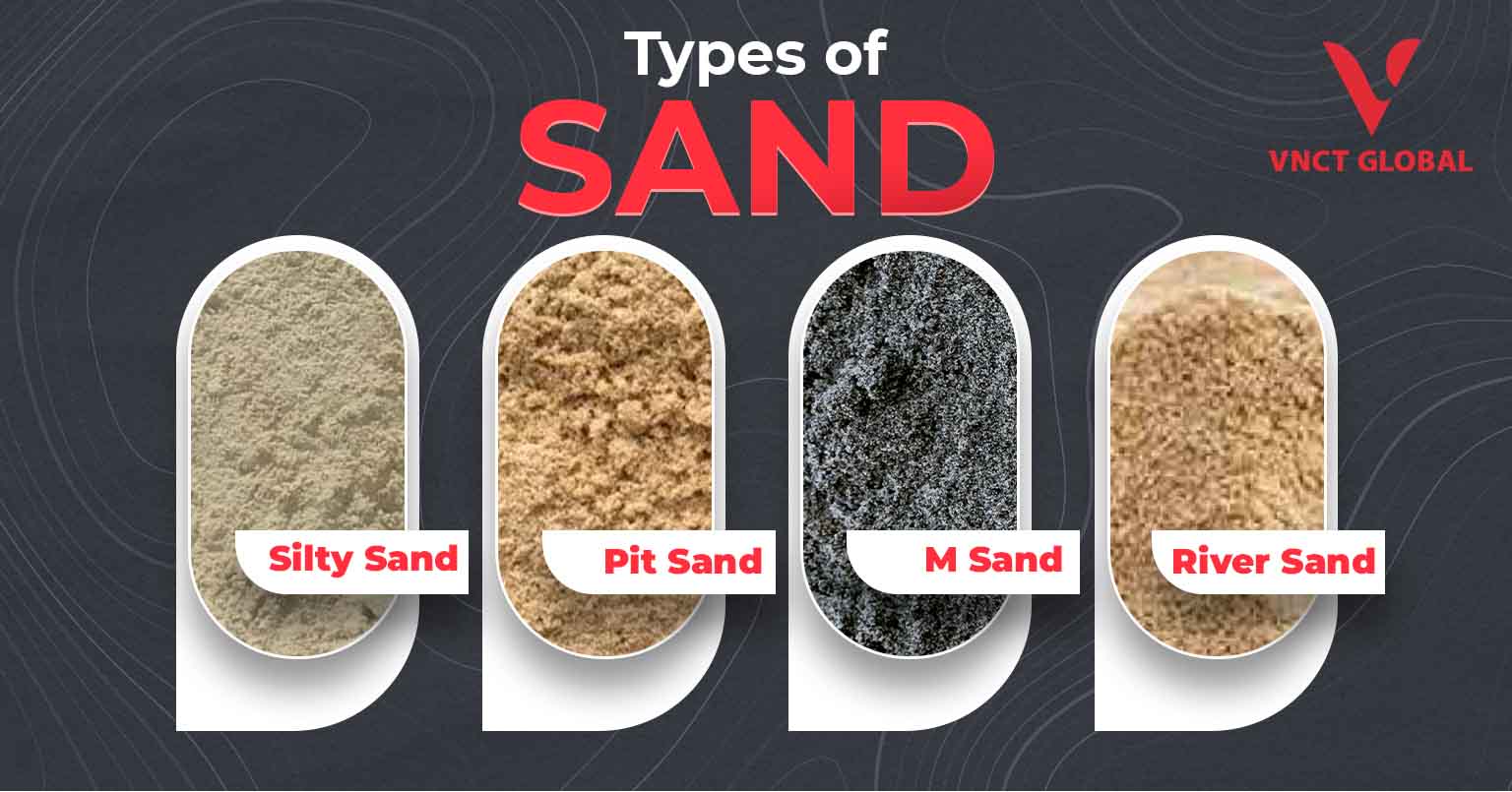
The Types of Sand Used in Construction include river sand, manufactured sand (M-Sand), concrete sand, pit sand, fill sand, utility sand, plastering sand, and crushed stone sand. Each type serves a specific purpose in construction, from foundation work and concrete preparation to plastering and landscaping. Choosing the right sand improves structural strength, durability, water resistance, and overall construction quality.
Introduction
Types of Sand Used in Construction play a crucial role in determining the strength, durability, and longevity of any building project. Whether it is a residential home, commercial complex, apartment tower, or luxury villa, selecting the right sand can significantly impact construction quality. Sand is one of the most essential materials used in concrete mixes, masonry work, plastering, flooring, and landscaping.
As construction technology continues to evolve, builders now have access to several types of sand, each designed for specific applications. Understanding the characteristics, advantages, and uses of different sand varieties helps property owners, engineers, architects, and contractors make informed decisions.
For homebuyers exploring premium properties from the best villa developers in india, understanding construction materials can provide confidence in the quality of the investment. High-quality construction starts with selecting superior raw materials, including the right type of sand.
In this comprehensive guide, we will explore the various types of sand used in construction, their properties, applications, benefits, and how they contribute to durable and sustainable structures.
Why Sand is Important in Construction
Sand serves as a fundamental ingredient in construction and acts as a binding material when mixed with cement and water. It fills voids between aggregates, improves workability, and contributes to the overall strength of structures.
Key Functions of Sand
- Provides strength to concrete.
- Enhances bonding between construction materials.
- Improves workability of mortar.
- Reduces shrinkage and cracking.
- Supports drainage and water management.
- Helps achieve smooth plaster finishes.
- Contributes to structural durability.
Without proper sand selection, buildings may face issues such as cracks, reduced strength, poor finishing, and water seepage.
Classification of Sand Based on Source
Construction sand is generally classified based on its source and manufacturing process.
Natural Sand
Natural sand is obtained from rivers, streams, and pits. It is naturally weathered over time and contains smooth particles.
Artificial Sand
Artificial or manufactured sand is produced by crushing hard rocks into fine particles. It has become increasingly popular due to environmental concerns regarding river sand mining.
Types of Sand Used in Construction
River Sand
River sand is one of the most commonly used construction materials. It is naturally available in riverbeds and consists of fine, rounded particles formed through natural weathering processes.
| Characteristics | Uses | Advantages | Limitations |
| Smooth texture | Concrete production | High strength | Increasing scarcity |
| Fine grains | Masonry work | Better workability | Higher cost |
| Excellent binding properties | Plastering | Superior finishing | Environmental concerns |
| Low impurities | Flooring | Reduced moisture retention | – |
| Naturally graded particles | RCC structures | – | – |
Despite these challenges, river sand remains a preferred choice for many residential projects and luxury developments.
Manufactured Sand (M-Sand)
Manufactured Sand, commonly known as M-Sand, is produced by crushing granite or hard stones into fine particles.
It has become a popular alternative to river sand due to its consistent quality and environmental sustainability.
| Characteristics | Uses | Advantages |
| Angular particles | Concrete production | Environmentally friendly |
| Controlled grading | RCC works | Cost-effective |
| Minimal impurities | Block manufacturing | Consistent quality |
| Uniform texture | Road construction | Better compressive strength |
| – | High-rise buildings | – |
Why M-Sand is Gaining Popularity
Many modern projects developed by the largest villa devlopers in india increasingly rely on M-Sand because of its availability and superior engineering performance.
Concrete Sand
Concrete sand is specifically processed to meet concrete production requirements.
| Characteristics | Applications | Benefits |
| Coarse texture | Concrete mixtures | Improved structural integrity |
| Uniform particle size | Pavement construction | Enhanced load-bearing capacity |
| High strength | Foundations | Reduced cracking |
| – | Industrial flooring | – |
Pit Sand
Pit sand is extracted from natural pits and is usually found below the ground surface.
| Characteristics | Uses | Advantages |
| Sharp particles | Foundation work | Excellent bonding |
| Coarse texture | Concrete preparation | High compressive strength |
| Free from salts | Masonry applications | Suitable for heavy construction |
Its rough texture enables stronger adhesion with cement, making it a preferred option for structural applications.
Fill Sand
Fill sand is primarily used for filling purposes rather than structural applications.
| Characteristics | Uses | Benefits |
| Fine particles | Land filling | Cost-effective |
| Good compaction properties | Foundation leveling | Easy to compact |
| Stable composition | Road base preparation | Improves ground stability |
| – | Landscape grading | – |
How Sand Impacts Villa Construction Quality
Premium villa communities require high-quality construction materials to ensure long-term durability and customer satisfaction.
Projects developed by the best villa developers in india often implement strict quality control measures for sand selection and testing.
Whether constructing luxury villas in chennai, elegant villas in madurai, or modern villas in coimbatore, selecting the correct sand type ensures:
- Strong foundations
- Crack-resistant walls
- Better plaster finishes
- Enhanced durability
- Improved property value
VNCT Global’s Commitment to Construction Quality
At vnct global, quality construction begins with the careful selection of materials. Every stage of development undergoes strict quality inspections to ensure residents receive homes built to the highest standards.
Projects such as:
are developed with a strong focus on structural integrity, sustainability, and long-term value.
This commitment has helped establish VNCT Global among the recognized names in premium villa development.
Types of Sand Based on Grain Size
Sand can also be classified according to grain size.
Fine Sand
Particle Size:
0.075 mm to 0.425 mm
Uses:
- Plastering
- Finishing work
- Tile bedding
Medium Sand
Particle Size:
0.425 mm to 2 mm
Uses:
- Masonry
- Mortar preparation
- General construction
Coarse Sand
Particle Size:
2 mm to 4.75 mm
Uses:
- Concrete production
- Structural foundations
- Heavy-duty applications
Proper grain size selection directly affects construction performance and durability.
Plastering Sand
Plastering sand is a specially processed sand designed to provide smooth wall finishes and superior adhesion during plastering applications. Unlike coarse sand used in concrete production, plastering sand contains finer particles that help achieve a polished and uniform appearance.
| Characteristics of Plastering Sand | Uses of Plastering Sand |
| Fine and clean particles | Internal wall plastering |
| Free from clay and organic impurities | External wall plastering |
| Uniform grading | Decorative finishes |
| Smooth texture | Ceiling applications |
| Excellent workability | Repair works |
Advantages
Better Surface Finish
The fine particles create a smooth and aesthetically pleasing wall surface.
Reduced Cracks
Uniform particle distribution minimizes shrinkage cracks after curing.
Improved Bonding
Plastering sand helps mortar adhere effectively to masonry surfaces.
Why Builders Prefer Plastering Sand
Modern villa projects emphasize aesthetics alongside structural strength. Whether constructing luxury villas in chennai or premium villas in madurai, plastering sand plays an essential role in achieving flawless finishes that enhance property value.
Utility Sand
Utility sand refers to highly processed sand used for a variety of non-structural and specialized construction applications.
| Characteristics | Common Uses | Benefits |
| Uniform particle size | Backfilling | Easy compaction |
| Clean composition | Landscaping | Good drainage properties |
| Versatile application range | Sports grounds | Cost-effective solution |
| – | Drainage systems | – |
| – | Utility trenches | – |
Utility sand is frequently used during site development to improve land grading and support infrastructure installations.
Crushed Stone Sand
Crushed stone sand is manufactured by crushing hard rocks into fine particles suitable for construction purposes.
| Characteristics | Applications |
| Angular particles | Concrete production |
| Consistent grading | Masonry work |
| High compressive strength | Foundation construction |
| – | Road construction |
Advantages
Better Strength
The angular shape improves interlocking properties within concrete mixes.
Sustainable Option
Reduces dependence on natural river sand resources.
Consistent Quality
Manufactured under controlled conditions for predictable performance.
Many projects undertaken by the largest villa devlopers in india utilize crushed stone sand due to its reliability and environmental benefits.
Sea Sand
Sea sand is naturally available along coastal regions and beaches.
Characteristics
- Rounded particles
- Presence of salt
- Fine texture
Advantages
- Easily available in coastal regions
- Cost-effective in certain locations
Challenges
The primary concern with sea sand is its salt content.
Salt contamination can:
- Corrode reinforcement steel
- Reduce concrete durability
- Cause structural deterioration
Can Sea Sand Be Used?
Yes, but only after thorough washing and treatment to remove salts and chlorides.
Most structural projects avoid untreated sea sand due to the potential risks involved.
Desert Sand
Desert sand consists of extremely fine particles shaped by wind erosion.
Characteristics
- Very smooth grains
- Rounded particle shape
- Fine consistency
Limitations
Although abundant, desert sand is generally unsuitable for concrete production because:
- Particles are too smooth
- Poor bonding with cement
- Lower structural strength
Potential Uses
- Landscaping
- Decorative applications
- Artificial terrain development
Researchers continue exploring methods to utilize desert sand more effectively in construction.
How to Test Sand Quality Before Construction
Selecting the correct type of sand is important, but testing its quality is equally essential.
Several simple tests can help evaluate sand quality before construction begins.
1. Silt Content Test
Excessive silt weakens concrete and mortar.
Procedure
- Fill a transparent bottle with sand and water.
- Shake thoroughly.
- Allow settlement.
If the silt layer exceeds acceptable limits, the sand may not be suitable for structural work.
2. Moisture Content Test
Moisture affects concrete mix proportions.
Importance
- Ensures accurate batching
- Prevents weak concrete
- Improves quality control
3. Bulking Test
Bulking occurs when moisture causes sand volume to increase.
Why It Matters
Incorrect volume measurements can affect mortar and concrete ratios.
4. Organic Impurity Test
Organic materials such as roots and decayed vegetation weaken concrete.
Quality construction projects conduct laboratory testing before large-scale usage.
5. Particle Size Distribution Test
This test determines whether sand particles meet required grading standards.
Benefits
- Improves workability
- Enhances strength
- Ensures consistency
Comparison of Different Types of Sand Used in Construction
| Type of Sand | Strength | Cost | Availability | Best Use |
| River Sand | High | High | Moderate | Concrete, masonry |
| M-Sand | Very High | Moderate | High | RCC, buildings |
| Concrete Sand | High | Moderate | High | Structural concrete |
| Pit Sand | High | Moderate | Moderate | Foundations |
| Fill Sand | Low | Low | High | Filling work |
| Plastering Sand | Medium | Moderate | High | Wall finishes |
| Utility Sand | Medium | Moderate | High | Landscaping |
| Crushed Stone Sand | Very High | Moderate | High | Concrete works |
| Sea Sand | Low | Low | High | Limited use |
| Desert Sand | Low | Low | High | Landscaping |
Construction Trends Shaping India’s Villa Market
India’s villa segment has experienced remarkable growth in recent years.
Factors driving this growth include:
- Increasing urbanization
- Rising disposable incomes
- Demand for gated communities
- Growth of NRI investments
- Preference for spacious living
Cities such as Chennai, Madurai, and Coimbatore continue attracting homebuyers seeking premium villa developments.
The demand for villas in chennai has grown due to infrastructure expansion, IT sector growth, and improved connectivity.
Similarly, villas in madurai are gaining popularity among investors seeking long-term appreciation and peaceful living environments.
The market for villas in coimbatore continues to expand due to industrial growth, educational institutions, and excellent climate conditions.
NRI Guide: Why Construction Quality Matters Before Investing
For Non-Resident Indians (NRIs), purchasing property in India represents more than an investment. It often reflects long-term family planning, retirement goals, and wealth creation strategies.
One of the most overlooked aspects during property evaluation is construction quality.
Why NRIs Should Pay Attention to Materials
Many buyers focus on:
- Location
- Amenities
- Price
- Developer reputation
However, construction materials determine:
- Structural lifespan
- Maintenance costs
- Property appreciation
- Safety standards
The quality of sand used in construction directly influences the durability of villas and residential developments.
Understanding the types of sand used in construction enables NRIs to make informed investment decisions.
Common Mistakes People Make While Choosing Sand
Many homeowners focus heavily on flooring, paint, and interiors while ignoring the materials hidden within the structure.
Some common mistakes include:
Choosing Sand Based Only on Cost
Cheaper sand may contain impurities that compromise structural strength.
Ignoring Laboratory Testing
Quality testing helps verify suitability for construction.
Using One Sand Type for Every Application
Different applications require different sand specifications.
Overlooking Moisture Content
Incorrect moisture levels can affect concrete quality.
Not Verifying Source Quality
Reliable sourcing ensures consistency and compliance with engineering standards.
How Premium Villa Developers Maintain Construction Quality
Reputed developers understand that construction quality begins long before finishing work starts.
Quality control measures often include:
- Material testing
- Soil analysis
- Structural design verification
- Third-party inspections
- Concrete cube testing
- Sand grading analysis
Many of the best villa developers in india follow rigorous quality assurance processes to ensure long-term durability and customer satisfaction.
Contact Us VNCT Global
Looking for premium villa investment opportunities in Tamil Nadu?
Whether you are a homebuyer, investor, or NRI exploring real estate opportunities, the team at contact us vnct global can assist you with project information, site visits, investment guidance, and property selection support.
From understanding construction quality to choosing the right villa community, VNCT Global aims to simplify the decision-making process through transparent communication and professional assistance.
Conclusion
Understanding the Types of Sand Used in Construction is essential for anyone involved in building, buying, or investing in real estate. Sand is more than a basic construction material—it directly influences strength, durability, safety, and long-term property value.
From river sand and M-Sand to plastering sand and crushed stone sand, each type serves a specific purpose and contributes differently to the construction process. Choosing the appropriate sand for each application ensures stronger structures, better finishes, and reduced maintenance costs.
As India’s real estate sector continues to grow, especially in premium villa communities, construction quality remains a defining factor for successful developments. Reputed developers and the best villa developers in india recognize the importance of quality materials and sustainable construction practices.
For homebuyers exploring villas in chennai, villas in madurai, and villas in coimbatore, understanding construction fundamentals can help make more informed decisions. Likewise, NRIs seeking long-term investment opportunities can benefit from evaluating the quality standards followed by developers.
At vnct global, a strong emphasis on construction quality, transparency, customer support, and community-focused development helps create homes designed for lasting value. Through projects such as Brookside residences, Palm shore, Palm Beach, Creek residences, Park villas, and Ocean drive villas, VNCT Global continues contributing to the evolving landscape of premium residential living.
Whether you are building a home, purchasing a villa, or planning a real estate investment, selecting the right materials including the right sand remains one of the most important decisions for long-term success.
FAQs for Types of Sand
What are the main Types of Sand Used in Construction?
The main types include river sand, M-Sand, pit sand, concrete sand, fill sand, plastering sand, utility sand, crushed stone sand, sea sand, and desert sand.
Which sand is best for construction?
M-Sand and river sand are commonly considered among the best options for structural construction.
Why is M-Sand becoming popular?
M-Sand offers consistent quality, better availability, and environmental sustainability.
What is river sand used for?
River sand is used in concrete, masonry, plastering, and flooring applications.
Is sea sand suitable for construction?
Sea sand can be used only after proper treatment to remove salt content.
Why is sand important in concrete?
Sand fills voids between aggregates and contributes to concrete strength and durability.
What is plastering sand?
Plastering sand is a fine-grade sand used for smooth wall and ceiling finishes.