Introduction
Today’s Cement Cost in Chennai is one of the most important factors influencing overall construction budgets in 2026. Whether you are planning an independent house, villas in Chennai, or a long-term real estate investment, understanding cement pricing helps you make informed financial decisions. Cement is not just another material—it directly impacts structural strength, durability, and overall project quality.
In Chennai’s dynamic construction ecosystem, prices fluctuate based on demand, raw material costs, logistics, and brand positioning. For investors, especially NRIs exploring opportunities with the best villa developers in India, tracking these changes becomes essential before starting any project.
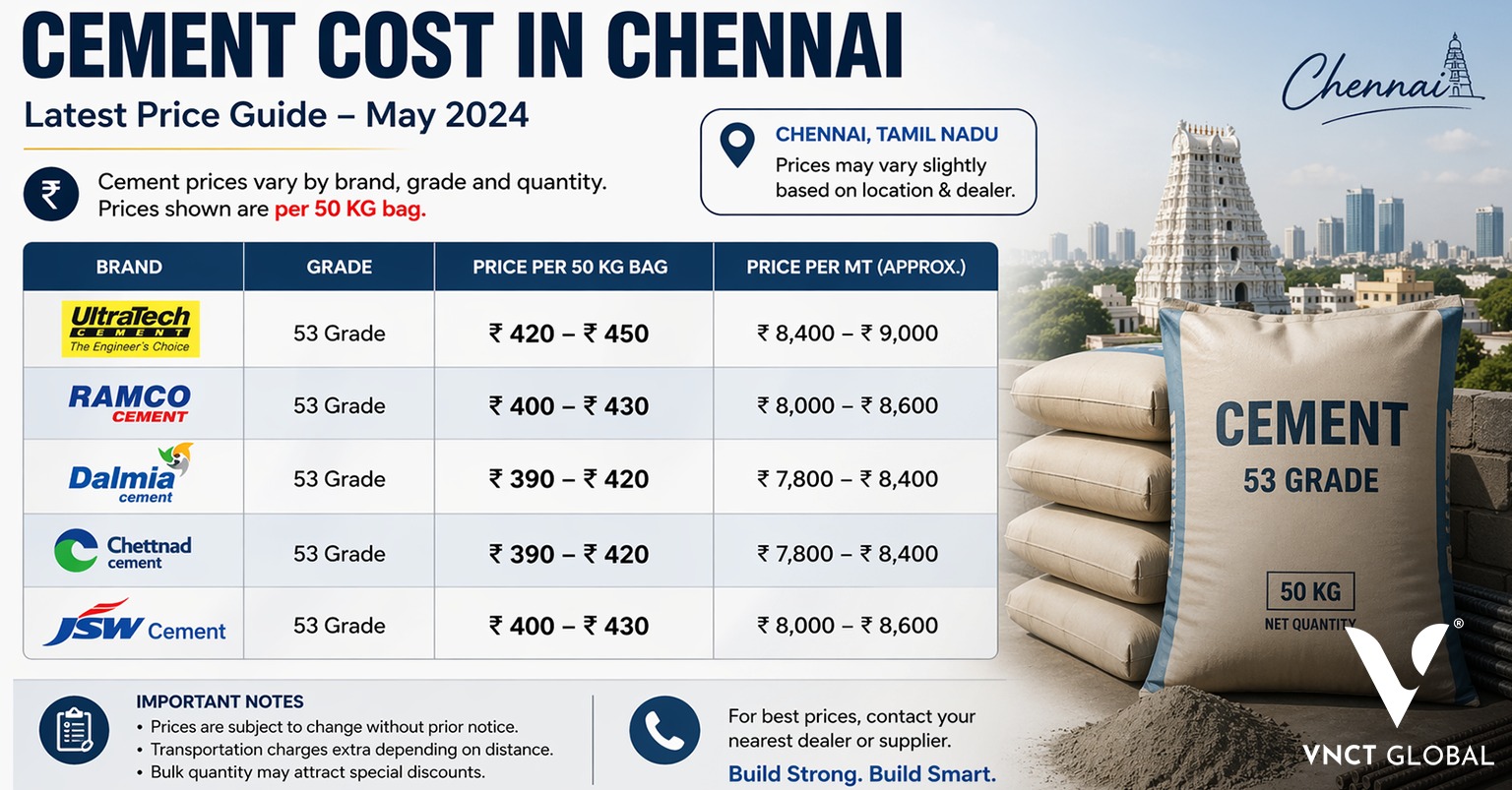
Current Cement Price in Chennai (2026)
As of 2026, the average cement price in Chennai is:
- ₹380 to ₹520 per bag (50 kg)
- Premium brands may go up to ₹550
- Bulk orders often reduce per-bag cost
Popular Cement Brands in Chennai
- UltraTech Cement
- Ramco Cement
- Dalmia Cement
- ACC Cement
- India Cements
Each brand offers different grades such as OPC, PPC, and PSC, tailored for different construction needs.
Cement Price Trend in Chennai (2024–2026)
Over the past few years, cement prices have shown steady growth:
- 2024: ₹320 – ₹420
- 2025: ₹350 – ₹480
- 2026: ₹380 – ₹520
Key Insight:
There is a 10%–15% yearly increase, mainly driven by demand, fuel cost, and infrastructure growth.
Factors Affecting Today’s Cement Cost in Chennai
Understanding Today’s Cement Cost in Chennai isn’t just about checking the current rate it’s about knowing what drives those numbers up or down. Even small changes in these factors can impact your overall construction budget significantly.
1. Raw Material Cost
Cement manufacturing depends heavily on inputs like limestone, coal, and electricity. When the cost of these raw materials rises, manufacturers adjust prices to maintain margins. For example, an increase in coal prices or power tariffs can quickly reflect in cement rates across Chennai.
2. Transportation Cost
Logistics play a major role in cement pricing. Since cement is transported in bulk, fuel price fluctuations directly affect delivery costs. Areas like ECR and OMR, which are rapidly developing, may see slightly higher prices due to increased transportation demand and distance from manufacturing units.
3. Demand & Supply
Cement prices are highly sensitive to market demand. During peak construction periods typically the dry season demand rises sharply, leading to price increases. On the other hand, during monsoon months, reduced construction activity can stabilize or slightly lower prices.
4. Government Policies
Regulations related to mining, environmental norms, and taxation have a direct impact on cement production and distribution. Infrastructure initiatives and policy changes can also influence demand, indirectly affecting pricing trends in Chennai.
5. Brand Value
Not all cement brands are priced the same. Established brands charge a premium due to their consistent quality, better strength, and long-term durability. While they may cost more upfront, they often reduce maintenance costs over time, making them a preferred choice for many builders and homeowners.
Types of Cement Used in House Construction
OPC (Ordinary Portland Cement)
- High strength
- Fast setting
- Ideal for structural work
PPC (Portland Pozzolana Cement)
- Better long-term durability
- Cost-effective
- Common for residential buildings
PSC (Portland Slag Cement)
- High resistance to moisture
- Ideal for coastal cities like Chennai
For villas in Chennai, PSC and PPC are widely preferred due to climate suitability.
How Cement Cost Impacts Construction Budget
Cement typically accounts for:
- 10%–15% of total construction cost
Example Breakdown:
If your construction budget is ₹60 lakhs:
- Cement cost ≈ ₹6 to ₹9 lakhs
This is why experienced builders and even the largest villa developers in India focus heavily on material planning and procurement efficiency.
Cement Consumption for a House
Approximate requirement:
- 1,000 sq.ft house → 400–500 bags
- 2,000 sq.ft house → 800–1,000 bags
This varies based on:
- Design complexity
- Structural requirements
- Soil condition
Cement Price Comparison – Chennai vs Other Cities
| City | Price Range (per bag) |
| Chennai | ₹380 – ₹520 |
| Bangalore | ₹400 – ₹540 |
| Hyderabad | ₹370 – ₹500 |
| Coimbatore | ₹360 – ₹480 |
For buyers comparing villas in Coimbatore or villas in Madurai, Chennai remains slightly premium due to urban demand.
Seasonal Impact on Cement Prices
- Summer: High demand → Higher prices
- Monsoon: Low construction → Prices stabilize
- Year-End: Bulk buying offers available
Smart buyers purchase during low-demand periods.
Why Villas Demand Better Material Planning
When it comes to villas in Chennai, construction is not just about building walls it’s about creating long-lasting, premium living spaces.
Villa construction involves:
- Stronger structural design
- Higher material consumption
- Better finishing standards
This naturally increases cement usage, making planning even more critical.
Projects like Palm Beach, Creek Residences, and Beverly Heights, Park Villas are good examples where precise material management ensures consistent quality across every unit
Cement Buying Tips for Home Construction
- Buy in bulk to reduce cost
- Choose trusted brands only
- Avoid storing cement for long durations
- Work with professional builders
- Track weekly price fluctuations
Cement Planning Mistakes That Increase Your Budget
Even when Today’s Cement Cost in Chennai remains stable, poor planning and execution can quietly push your construction budget up by 10–20%. Most of these losses don’t come from price hikes but from avoidable mistakes on-site.
1. Over-ordering Cement
Buying more cement than required may seem safe, but it often leads to wastage. Cement has a limited shelf life, and prolonged storage reduces its binding strength. Unused bags eventually become unusable, directly adding to your costs.
2. Improper Storage
Cement is highly sensitive to moisture. If it’s not stored in a dry, elevated, and covered space, it can absorb humidity from the air. This not only weakens its quality but can also make entire batches unusable, forcing you to repurchase.
3. Using the Wrong Cement Type
Not every stage of construction requires the same type of cement. Using high-grade OPC where PPC would suffice increases costs without adding real value. Smart material selection ensures both performance and cost efficiency.
4. No Consumption Tracking
Without proper monitoring, it’s easy to lose track of how much cement is being used daily. This can lead to unnoticed wastage, pilferage, or inefficient mixing practices all of which inflate your budget over time.
5. Working Without Expert Supervision
Construction without professional oversight often results in poor planning and repeated purchases. Price fluctuations between purchases can increase overall spending, and lack of expertise may lead to inefficient usage.
Partnering with experienced developers like VNCT Global helps avoid these common mistakes through structured planning, precise estimation, and quality-controlled execution.
Future Outlook of Cement Prices in Chennai
Looking ahead:
- Prices likely to increase steadily
- Infrastructure projects will drive demand
- Eco-friendly cement may influence pricing
Early planning can help lock better rates.
Smart Insight for Investors
For investors attending events in Dubai events in sinapore and exploring Indian real estate, understanding cement pricing helps evaluate:
- Builder transparency
- Project cost efficiency
- Long-term investment value
Projects like Palm Beach, Creek residences, and Park villas often reflect how efficiently materials are managed.
Smart Cement Planning Strategy
To optimize cost and quality:
- Plan cement usage phase-wise (foundation, structure, plastering)
- Align purchases with construction schedule
- Maintain proper storage conditions
- Track daily consumption
- Work with professionals who handle procurement efficiently
This level of planning is standard practice among the largest villa developers in India, ensuring both cost control and durability. NRI Villas Singapore
How VNCT Global Solves These Problems
This is where VNCT Global becomes a strong differentiator—not just as a builder, but as a complete investment partner.
1. Full Transparency in Material Usage
Clients receive:
- Clear breakdown of cement type and quantity
- Brand-level clarity
- Stage-wise consumption reports
No guesswork. No hidden costs.
2. Smart Procurement System
VNCT Global leverages:
- Bulk purchasing power
- Long-term supplier relationships
This ensures:
- Stable pricing
- Consistent quality
Across projects like Palm Shores, Brookside residences, and Ocean drive villas, this system helps maintain cost efficiency without compromising standards.
3. Virtual Construction Monitoring
NRIs can:
- Track progress remotely
- Receive regular updates
- View construction stages
This eliminates the need for constant physical visits.
4. Quality Assurance at Every Stage
Strict checks ensure:
- Right cement type is used
- Proper curing methods are followed
- Structural integrity is maintained
This is one of the key reasons VNCT Global is consistently recognized among the best villa developers in India.
5.Legal & Documentation Support
From booking to registration:
- Complete documentation assistance
- Clear legal processes
- Smooth ownership transfer
6. Post-Sale Services
Beyond construction, VNCT Global supports:
- Property maintenance
- Rental management
- Resale assistance
This makes it ideal for long-term investors and NRI buyers.
Conclusion
Understanding Today’s Cement Cost in Chennai is not just about knowing the price it’s about planning smarter construction. From selecting the right cement type to tracking market trends, every decision affects your final budget and building quality.
Whether you’re building locally or planning future investments, staying informed ensures better financial control and long-term durability.
FAQs for Today’s Cement Cost in Chennai for House Construction
How can I reduce cement cost in construction?
Reducing cement cost starts with proper planning and execution. Buying in bulk at the right time, storing cement correctly to avoid damage, and minimizing wastage during construction can make a noticeable difference. Working with experienced builders also helps, as they follow efficient usage practices and avoid unnecessary material loss.
Is cement planning important for villas?
Yes, cement planning is especially important for villas. Compared to standard houses, villas involve larger built-up areas, structural detailing, and premium finishes. Accurate estimation ensures you don’t overspend or face shortages midway, keeping both quality and budget under control.
Can NRIs monitor construction remotely?
Absolutely. Today, many developers offer digital solutions like live updates, video walkthroughs, and progress reports. Companies like VNCT Global provide structured virtual monitoring systems, allowing NRIs to stay informed and confident without being physically present.
Why choose professional builders instead of managing independently?
Professional builders bring technical expertise, vendor networks, and project management experience. They ensure proper material selection, controlled cement usage, adherence to timelines, and compliance with regulations—reducing both risk and stress for the homeowner.
Does builder choice impact cement usage?
Yes, significantly. An experienced builder knows how to optimize cement usage without compromising strength. Poor planning or unskilled execution can lead to overuse, wastage, or even structural issues, ultimately increasing costs.
Is Chennai good for NRI property investment?
Chennai continues to be a strong choice for NRI investors due to its growing infrastructure, IT corridors, and steady real estate demand. Areas like ECR and OMR offer excellent opportunities, especially when investing with trusted developers who ensure transparency and long-term value.