Introduction
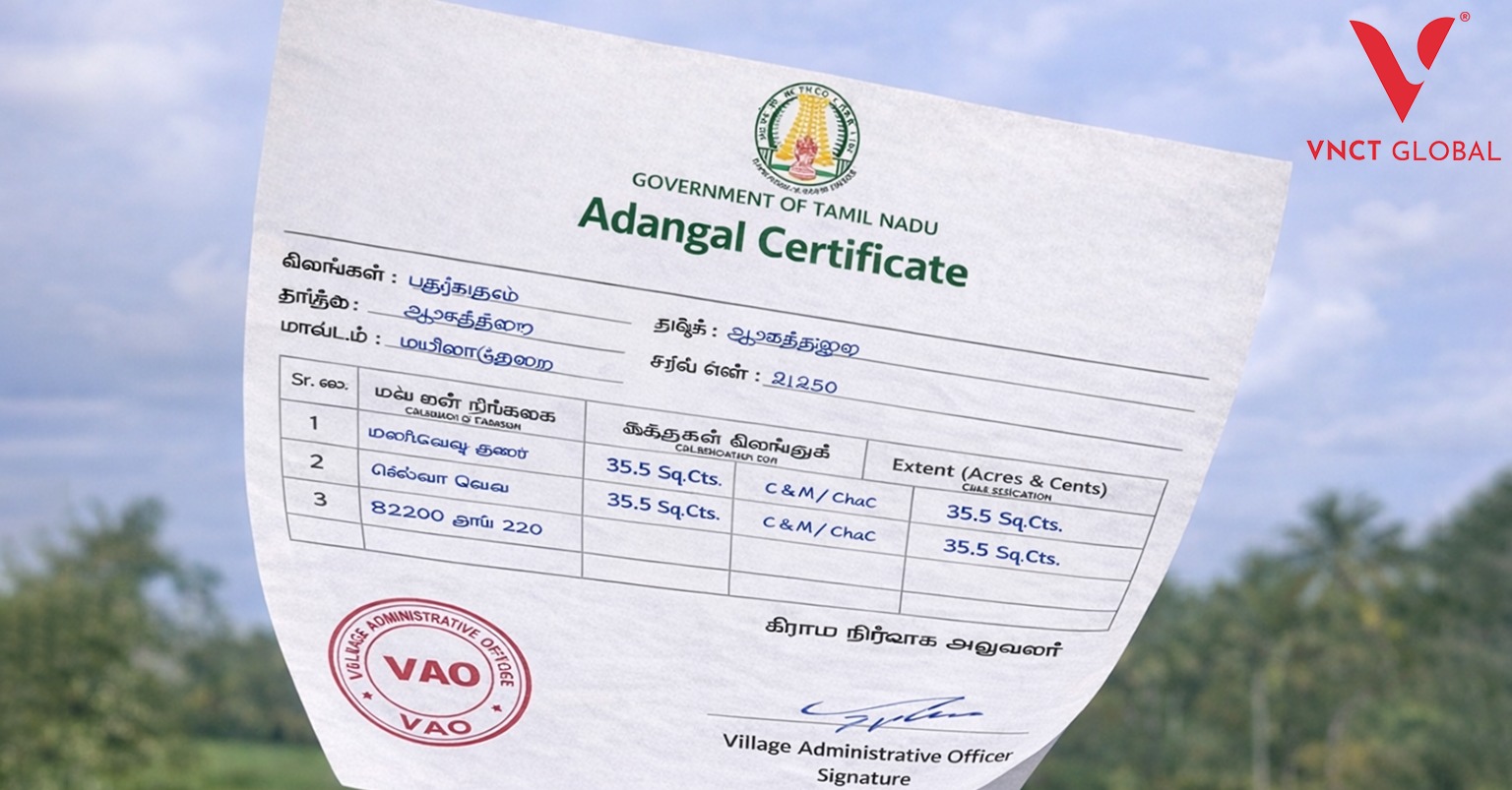
Adangal certificate in Tamil Nadu is one of the most important land revenue records maintained by the Village Administrative Officer (VAO). If you are planning to buy agricultural land, convert land for residential use, or verify ownership details, this document plays a crucial role. Yet, many buyers—especially NRIs—are not fully aware of what it contains or why it matters.
In simple terms, an Adangal (also known as “Village Account No. 2”) records details about a particular piece of land: who owns it, what type of land it is, what crops are cultivated, the survey number, extent of land, and tax-related entries. It is not a title deed, but it is a supporting revenue document that validates possession and usage details.
Whether you are purchasing agricultural land in rural Tamil Nadu or evaluating large-scale residential developments from the best villa developers in india, understanding the adangal certificate in tamilnadu helps you make safe, legally sound decisions.
What Exactly Is an Adangal Certificate?
The Adangal certificate is a revenue record maintained at the village level by the VAO under the Tamil Nadu Revenue Department. Historically, it was maintained manually in village registers. Today, many records are digitized and accessible through the Tamil Nadu e-Services portal.
It includes:
- Survey number and sub-division number
- Land classification (wet, dry, natham, etc.)
- Patta number
- Name of the landholder
- Nature of cultivation
- Crops grown (if agricultural)
- Extent of land (in hectares/acres)
- Tax details
If you’re buying farmland or converting agricultural land into plots, the adangal certificate in tamilnadu becomes a primary supporting document during verification.
Why Is the Adangal Certificate Important?
Many buyers wrongly assume that the Sale Deed alone is enough. In reality, land transactions in Tamil Nadu involve multiple supporting documents.
Here’s why Adangal matters:
1. Confirms Land Classification
You can verify whether the land is agricultural, residential, or government land.
2. Verifies Cultivation History
Banks often check Adangal while approving agricultural loans.
3. Supports Patta
While Patta confirms ownership entry, Adangal shows possession and usage details.
4. Helps in Due Diligence
Before investing in villas in chennai, villas in madurai, or villas in coimbatore, developers conduct complete land verification including Adangal to avoid future disputes.Even the largest villa devlopers in india rely on clear revenue documentation before launching projects.
Difference Between Patta and Adangal
Many people confuse these two.
| Patta | Adangal |
| Ownership record | Usage & cultivation record |
| Issued in owner’s name | Maintained at village level |
| Required for property mutation | Required for revenue verification |
| Shows land classification | Shows crop details and possession |
Both documents together give a clearer legal picture.
How to Get Adangal Certificate in Tamil Nadu?
There are two main ways:
1. Through VAO Office
You can visit the local Village Administrative Officer office with:
- Survey number
- Patta number
- Owner name
2. Online Through Tamil Nadu e-Services
Steps:
- Visit Tamil Nadu e-Services portal
- Select “View A-Register Extract” or “Adangal Extract”
- Enter district, taluk, village, survey number
- Download extract
For NRIs, online access is extremely helpful when you cannot physically visit the village office.
Types of Land Classifications Mentioned in Adangal
One of the most critical parts of an Adangal extract is land classification. Many buyers ignore this and that is where mistakes happen.
Here are the common classifications you’ll find:
1. Nanjai (Wet Land)
Land suitable for water-intensive crops like paddy.
2. Punjai (Dry Land)
Land used for dry cultivation such as groundnut, millets, etc.
3. Grama Natham
Village residential land.
4. Natham
Land designated for habitation.
5. Poramboke
Government land. This includes:
- Water bodies
- Roads
- Temple lands
- Grazing land
If a property shows Poramboke classification, it is not privately transferable land.
For NRIs investing in villas in chennai, villas in madurai, or villas in coimbatore, checking this classification is non-negotiable.
Reputed developers especially the largest villa devlopers in india verify land classification before any layout planning begins.
Adangal Certificate for Home Loan Approval
Banks verify:
- Land classification
- Possession records
- Continuity of ownership
If discrepancies appear in Adangal, loan approval may be delayed or rejected.
For NRIs applying through Indian banks, document consistency becomes even more important.
How Adangal Protects NRIs from Land Fraud
NRIs are more vulnerable due to physical absence.
Common risks include:
The adangal certificate in tamilnadu helps verify actual revenue entries maintained by government authorities.
At VNCT Global, we assist NRI investors with structured documentation review. If you need clarity before investing, you can contact us VNCT Global for proper guidance.
Why Large Developers Verify Revenue Records First
Before acquiring hundreds of acres, responsible developers conduct:
- 30-year parent document verification
- Revenue continuity check
- Adangal extract analysis
- Encumbrance verification
- Legal opinion
This discipline separates marketing-driven builders from the best villa devlopers in india.
Why NRIs Should Pay Extra Attention
If you are an NRI planning to invest in Tamil Nadu real estate, understanding the adangal certificate in tamilnadu is essential.
Here’s why:
- You may not be physically present to inspect land
- Fraudulent land classification changes are possible
- Agricultural land has restrictions under FEMA
- Banks abroad require verified land records
At VNCT Global, we regularly meet NRI communities during events in dubai and explain the importance of land documentation before purchase. Many NRIs assume a project brochure is enough but documentation transparency is what protects your investment.
How VNCT Global Supports NRIs
When NRIs invest in projects like Brookside residences, Palm shore, Palm Beach, Creek residences, Park villas, or Ocean drive villas, our process includes:
- Complete land title verification
- Adangal & Patta verification
- Encumbrance certificate check
- Layout approval verification
- Legal opinion from independent advocates
We believe that transparency builds trust. That’s why buyers who approach the best villa devlopers in india expect documentation clarity—not just architectural beauty.
If you are abroad and unsure how to check your land records, you can contact us VNCT Global for assistance. Our team provides structured documentation review support before purchase.
Is Adangal Required for Villa Projects?
Yes. Before launching gated community projects, responsible developers verify:
- Parent documents
- Adangal extracts
- Land classification
- Conversion approvals
Reputed names among the best villa devlopers in india conduct due diligence to ensure that the land is legally suitable for residential development.
Without proper revenue records, future approvals like CMDA/DTCP may become complicated.
Common Mistakes Buyers Make
- Checking only the Sale Deed
- Ignoring land classification
- Not verifying crop history
- Assuming layout approval replaces revenue records
- Relying only on agent statements
Documentation is what protects you long-term.
Can Adangal Be Used as Ownership Proof?
No. It supports ownership but does not replace:
- Sale Deed
- Patta
- Registered documents
It is a supplementary revenue record.
Real-Life Example
Consider an NRI buying agricultural land to convert into plotted development. If the Adangal shows:
- Government poramboke classification
- Water body classification
- Temple land classification
The transaction becomes legally risky.
This is why documentation review is non-negotiable, especially for overseas buyers.
Why Documentation Matters More Than Marketing
In real estate, marketing may attract attention—but documentation builds permanence.
The largest villa devlopers in india understand this. When you explore villas in chennai, villas in madurai, or villas in coimbatore, always ask:
- Can I see the Adangal extract?
- Is the land properly classified?
- Has conversion been approved?
Professional developers will always provide clarity.
History and Legal Background of Adangal in Tamil Nadu
To truly understand the adangal certificate in tamilnadu, we need to go back to how land revenue administration evolved in the state.
The Adangal system originated during the British revenue settlement period, when systematic village-level land documentation became necessary for taxation. Tamil Nadu adopted a structured village account system, where every parcel of land was recorded under different registers maintained by the Village Administrative Officer (VAO).
Even today, Adangal (Village Account No. 2) continues under the Tamil Nadu Revenue Department. While digitization has modernized access, the legal foundation remains rooted in revenue administration rules. It is not a title deed, but it is a recognized government-maintained land record used in verification, banking, and legal due diligence.
For serious developers including some of the best villa devlopers in india these foundational revenue documents are always reviewed before acquiring large land parcels.
Case Study – Why Revenue Records Matter
An NRI investor once identified agricultural land at an attractive price. The Sale Deed looked clean.
But the Adangal extract revealed Poramboke classification linked to a water channel.
That single verification saved the buyer from a serious legal dispute.
This is why experienced buyers always verify revenue records before committing funds.
Final Thoughts
Understanding the adangal certificate in tamilnadu is not just for farmers—it is for every serious land investor. Whether you are a local buyer or an NRI evaluating opportunities from abroad, revenue records are your first layer of legal protection.
Before investing in projects from the best villa developers in india, or exploring premium developments like Brookside residences or Palm Beach, always verify documentation.
Real estate is not just about location or design—it is about legal clarity.
If you need structured guidance or documentation support, especially as an overseas investor, reach out to VNCT Global. Transparent processes protect your future investment.
FAQ for adangal certificate in tamilnadu
- What is adangal certificate in tamilnadu used for?
It is used to verify land usage, classification, cultivation history, and revenue records. - Is Adangal mandatory for land registration?
It is not mandatory for registration, but it is important for verification and due diligence. - Can NRIs access Adangal online?
Yes, through Tamil Nadu e-Services portal. - Is Adangal proof of ownership?
No. Sale Deed and Patta establish ownership. Adangal supports usage details. - How often is Adangal updated?
It is updated periodically by the Village Administrative Officer, especially when cultivation details change. - Can Adangal show if land is agricultural?
Yes. It clearly indicates land classification such as wet or dry agricultural land. - Why do villa developers check Adangal?
To ensure the land is legally suitable for residential development.