Introduction
Underground Homes spark the imagination: living spaces nestled into the earth, offering a blend of privacy, energy efficiency and novelty. For NRIs investing in luxury villas through one of the best villa developers in India, such as VNCT Global (behind projects like Brookside Residences, Palm Beach, Creek Residences, Park Villas and Ocean Drive Villas), the idea may seem futuristic yet intriguing. But while underground homes carry distinct advantages, they also come with hidden design, construction and maintenance challenges—especially in climates like Chennai, Coimbatore or Madurai, and for investors managing property remotely. In this blog, we’ll unpack what underground homes are, major types, pros & cons, real-world examples, and what NRIs should ask when working with a builder (among the largest villa developers in India) so they don’t get caught off guard.
What Are Underground Homes?
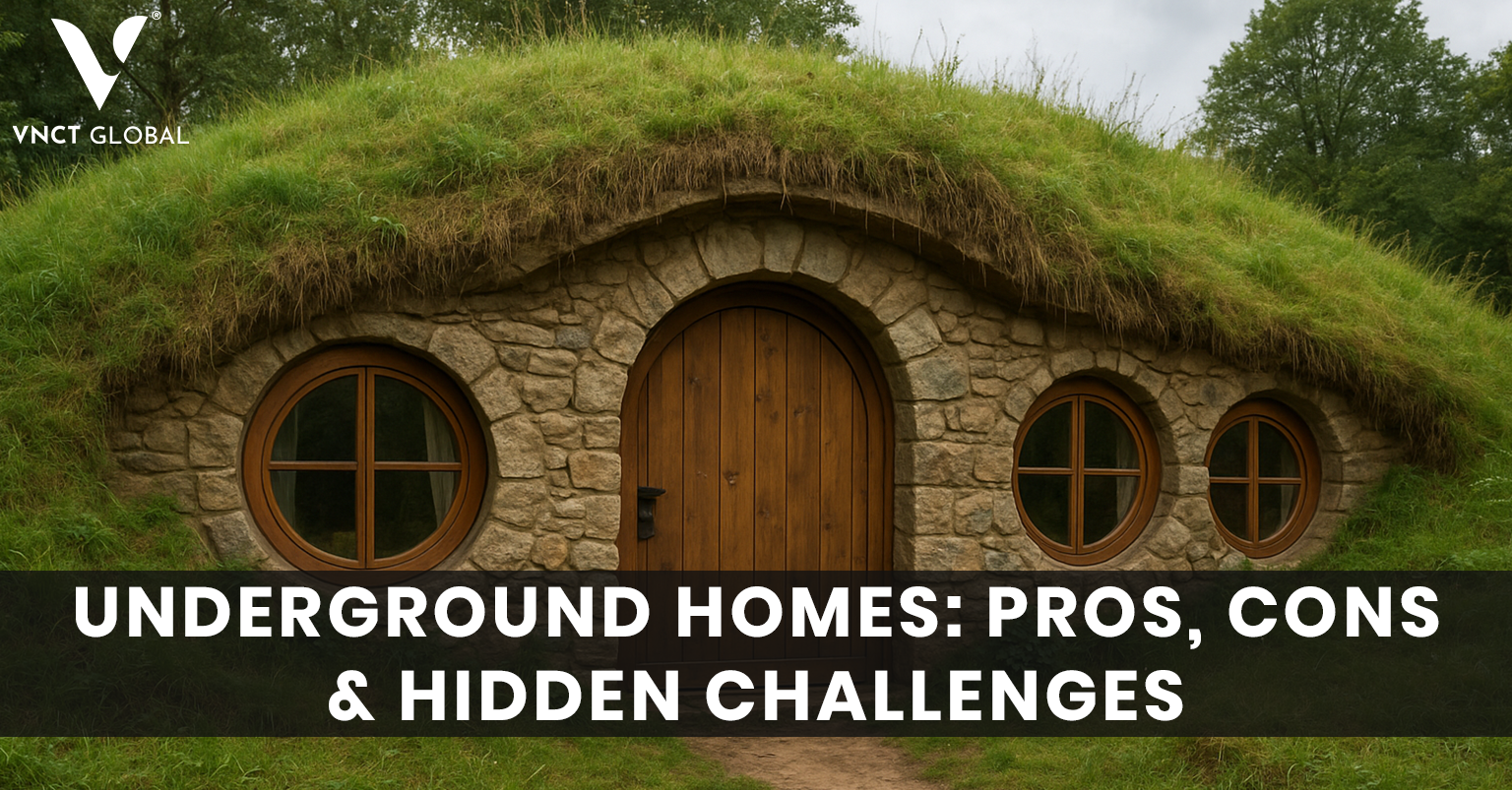
Underground homes (also referred to as earth-sheltered homes) are dwellings that are partially or fully built beneath the ground surface, often with earth or vegetation covering walls or roofs, or built into slopes/hills. According to the U.S. Department of Energy, one definition: “When an entire house is built below grade or completely underground, it’s called an underground structure.
These kinds of homes use the earth’s natural insulation to keep indoor temperatures more consistent throughout the year. They also tend to blend beautifully into the landscape, offering a subtle appearance and, in many cases, better privacy and security.
That said, underground or semi-underground houses need a bit more thought before construction begins. Things like soil conditions, waterproofing, and proper ventilation play a big role, and the initial investment can be higher than a regular home.
If you’re an NRI planning to invest through a developer like VNCT Global, it’s worth taking a closer look at a few practical points — how suitable the land is for such a design, how easy it will be to maintain the property from abroad, how it might perform in resale, and whether the builder has hands-on experience with these types of structures.
Major Types of Underground Houses
There are several approaches to building underground homes. Here are three common types:
1. Berm-Style Underground Homes
In this type, the house is at or slightly below grade and is covered (bermed) with earth on one or more sides or on the roof. Only some walls/windows may be exposed. According to the DOE: “In the penetrational bermed design, earth covers the entire house except where there are windows and doors. This style may work well in custom villa settings provided the site slopes or the developer plans landscaping accordingly.
2. Atrium-Style Underground Homes
Here, the major living spaces surround a sunken central courtyard or atrium which brings light and access. The main house is below ground but opens into the atrium. This allows more natural light and views despite being subterranean.For villas built by one of the best villa developers in India, this could be an innovative design feature but you’ll want to see precedent and clarity on natural light and ventilation.
3. Elevational Style Underground Homes
This style may be partially buried: for example, built into a hillside so that one side is exposed and one or more sides are underground. Windows and doors may face outward from the exposed side, blending underground and exposed elements. For NRIs investing in villas in Chennai or Madurai where land may have slope or elevation, this hybrid might be more practical than fully underground.
Benefits of Earth-Sheltered Homes
Energy Efficiency & Temperature Control
Because the surrounding earth acts as insulation, underground homes tend to maintain a more stable internal temperature cooler in summer, warmer in winter (depending on location). This can reduce HVAC energy loads.For a villa investor in tropical Tamil Nadu, this could translate to lower cooling costs and better comfort—especially valuable when managed remotely as an NRI.
Durability & Protection
These homes can be better protected from storms, extreme weather, and even noise. The earth buffer provides structural benefits For a luxury home built by one of the largest villa developers in India, this added robustness may enhance resilience and value.
Noise Reduction & Privacy
Being underground or earth-sheltered often means reduced external noise, more tranquil environments, and enhanced privacy good for high-end villas, gated community living, or NRI holiday homes.
Eco-Friendly & Aesthetic Appeal
Underground homes often stand out for the way they blend naturally with the landscape. Their low visual impact, scope for green roofs, and seamless connection with surrounding greenery make them appealing from both a design and sustainability point of view. Many architectural experts highlight these homes for their strong eco-friendly features.
For NRIs investing in a villa through VNCT Global, this combination of aesthetic charm and environmental responsibility can add to your property’s overall appeal and even boost its resale value in the long run.
Drawbacks of Underground Homes
Moisture & Ventilation Issues
One of the biggest challenges is controlling moisture, groundwater pressure, and ensuring proper ventilation. The DOE specifically points out the risk of humidity/condensation in earth-sheltered homes.
For a villa in Chennai or coastal Tamil Nadu, where monsoons and groundwater levels may be high, this is especially relevant. As an NRI, you’ll want to ensure the builder has robust drainage, membrane waterproofing, and local maintenance support.
Construction Costs & Complexity
While operational costs may drop, the upfront cost tends to be higher due to excavation, special waterproofing, drainage, structural walls, etc. The DOE mentions initial costs may be up to 20% more.
For luxury villas by premium developers, this cost may be passed on. You’ll want to assess value for money, especially since you’re investing remotely.
Limited Natural Light
Because of the subterranean nature, access to daylight and views can be reduced unless the design incorporates atriums, light wells or exposed façades. Poor light means possible occupant discomfort, higher lighting/equipment use.When a villa project by one of the best villa developers in India introduces an underground component, insist on previewing lighting, window layouts, and how the interior daylight will perform.
Accessibility & Market Value
Underground homes may have unique resale dynamics. Some buyers may prefer conventional above-ground homes. Also, accessibility (stairs, slopes, egress) may pose issues for broad owner profiles. The novelty may limit broader market appeal unless well executed.For NRIs, considering long-term liquidity and global investors who might purchase your villa later, this is an important market risk.
Some Major Examples of Earth-Sheltered Homes
- Villa Vals (Vals, Switzerland) — Built largely into the mountain side, blending into the landscape.
- Aloni House (Greece) — Unique underground/earth-sheltered design (mentioned among leading earth-homes).
- China: historic examples of subterranean dwellings (like yaodongs).
- India: The first earth-sheltered home near Murbad (Maharashtra) described as a “hobbit-inspired” underground home.
- And while not exactly villas by VNCT Global yet, you could envision a future luxury villa in Tamil Nadu adopting this theme especially for NRI buyers seeking uniqueness.
Building an Underground Home in India
If you’re planning to build an underground or earth-sheltered villa in India whether in Chennai, Madurai, or Coimbatore there are a few important factors to think about before you begin:
Soil and Site Assessment:
Start with a proper soil test and site study. Check the soil’s strength, groundwater levels, slope, and drainage capacity all of which the Department of Environment (DOE) strongly recommends.
Waterproofing and Drainage:
These are crucial, especially in areas with heavy monsoons. Effective waterproofing and drainage systems protect your structure and prevent long-term damage.
Natural Light and Ventilation:
Incorporate features like light wells, atriums, or partially exposed façades to keep the interiors bright and airy.
Builder Expertise:
Choose a developer with experience in earth-sheltered designs. Whether it’s VNCT Global or another reputed villa developer, make sure they’ve successfully executed similar projects before.
Regulations and Resale:
Some municipal rules restrict underground living areas or have specific safety and ventilation requirements. It’s best to verify these in advance to avoid future issues.
Maintenance and Remote Management:
For NRIs, it’s vital to have reliable on-ground maintenance support. Developers like VNCT Global offer NRI-friendly services, including regular updates, local maintenance teams, and remote monitoring options which can be a big relief when managing property from abroad.
Market Appeal and Resale Value:
Since underground homes cater to a niche audience, ensure the villa’s design has enough broad appeal for resale or rental potential in the future.
Conclusion
Underground homes are undoubtedly appealing a blend of innovation, sustainability and luxury. For investors eyeing villas in Chennai, villas in Coimbatore or villas in Madurai with a top-tier builder (one of the best villa developers in India, or among the largest villa developers in India), the concept of an “underground” or earth-sheltered villa may feel avant-garde. Yet the benefits in energy efficiency, uniqueness and privacy must be weighed against the hidden challenges: waterproofing, ventilation, light, cost and marketability. When partnering with VNCT Global, NRIs benefit from their villa-development experience, after-sales support and documentation making your dream home not just beautiful, but buildable and manageable from abroad. If you’re curious about such a design or want to explore villa options with underground elements, feel free to contact us VNCT Global and let’s evaluate whether this bold style aligns with your investment and lifestyle goals.
FAQs for Underground Homes
1. Are underground homes suitable for tropical climates like Chennai or Madurai?
They can be but you must address moisture, waterproofing, drainage and natural light carefully. In a humid, monsoon region, extra investment is needed in waterproofing and ventilation.
2. Does building underground cost more than a conventional villa?
Yes. Costs include excavation, specialized structural walls, waterproofing, drainage, lighting and ventilation systems. The U.S. Department of Energy estimates up to 20 % higher initial cost.
3. What are the maintenance issues for an underground home?
Moisture ingress, ventilation/air-quality, lighting, egress planning, drainage system upkeep, and sometimes specialised structural inspection.
4. As an NRI investor, what should I ask my villa developer about if I consider an underground home?
Ask about: previous underground/earth-sheltered projects, waterproofing warranty, natural light/ventilation design, site-specific soil/groundwater studies, remote/client handover support, resale demand. Partnering with a developer like VNCT Global that offers NRI-friendly service can mitigate risks.
5. Does an underground home increase resale value?
It depends. A well-executed underground home in a luxury villa project by a top developer can be a standout feature; but niche designs may have narrower buyer pools. Marketability must be considered.
6. Can you get natural light and views in an underground home?
Yes through design features like atriums, light-wells, exposed façades or windows looking into courtyards. But these must be integrated at design stage.