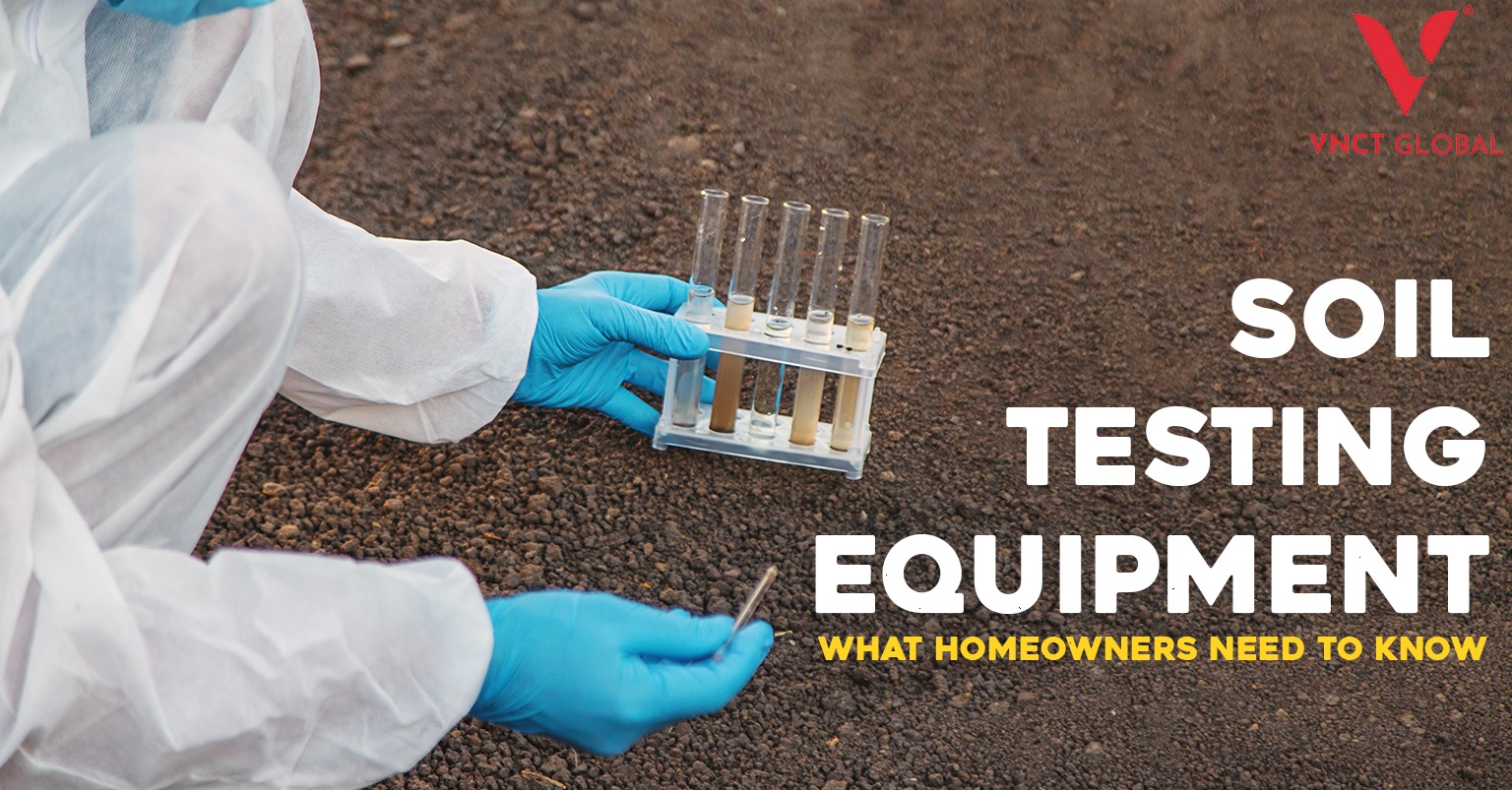
Introduction
Before a single brick is laid or a boundary is marked, the ground beneath your feet decides how strong, safe, and long-lasting your structure will be. That’s why Soil Testing Equipment plays a crucial role in every construction project whether it’s a small home, a commercial building, or even a large villa community developed by some of the best villa developers in India. Good soil tells you how much load the land can take, how it reacts to moisture, and whether it needs any stabilization before construction begins.
In today’s real estate environment especially for people buying property from abroad understanding soil health isn’t just a technical step, but a reassurance. Even reputed firms like VNCT Global, known for sustainable villa projects such as Brookside Residences, Palm Beach, Creek Residences, Park Villas, and Ocean Drive Villas, rely heavily on scientific soil testing to ensure long-term stability for every homeowner. This is why soil testing matters, not just for engineers, but for buyers, NRIs, and anyone investing in a home.
Why is Soil Testing So Important for Your Home Construction?
Most homebuyers don’t think about the ground beneath their house until something goes wrong. But engineers know that soil quality can directly impact the strength of the foundation, the lifespan of the structure, and even long-term maintenance costs.
Here’s why soil testing is non-negotiable:
- Foundation stability: Every soil type behaves differently. Clay expands, sandy soil shifts, and rocky soil may need special foundation techniques.
- Load-bearing capacity: If the soil can’t handle the weight, cracks and settlement will appear later.
- Moisture behavior: Some soils swell or shrink based on moisture a major issue in Indian climates.
- Construction safety: Engineers depend on soil data to design safe foundations.
- Cost accuracy: Without soil testing, you risk overspending or underestimating construction needs.
This is one of the reasons why the largest villa developers in India put soil testing at the top of their planning checklist. It’s not just a technical formality it’s the foundation of quality.
Major Types of Soil Testing Equipment
Below are the key instruments engineers use to understand soil behavior before construction begins.
1. Speedy Moisture Meters
Moisture content changes everything from strength to density. A speedy moisture meter helps engineers quickly check how wet the soil is. This allows them to understand shrinkage, swelling, and compaction behavior before foundation work starts.
2. Atterberg Limits Apparatus
This set helps measure the liquidity, plasticity, and shrinkage limits of clayey soils. It’s important in regions with high rainfall or clay-based terrain such as parts of Chennai and Madurai where soil movement is common.
3. Proctor Compaction Test Apparatus
Compaction determines how stable the soil will be under pressure. This test helps find the optimal moisture content for maximum soil density. If you’ve seen engineers ramming soil or running rollers, this is the science behind it.
4. Direct Shear Test Apparatus
This device measures the shear strength of soil basically, how much force the soil can withstand before it begins to slide or crumble. It’s especially important while constructing basements, retaining walls, or sloped structures.
5. CBR (California Bearing Ratio) Testing Machine
CBR tests reveal how well soil can support roadways, pavements, or foundations. For villa communities or gated layouts, this test ensures that internal roads and building platforms remain stable for decades.
6. Triaxial Shear Test Apparatus
This advanced equipment simulates multiple stress conditions on soil samples. Engineers use it when working with complex soil types or high-rise foundations.
7. Unconfined Compression Test Machine
Commonly used for cohesive soils, this test measures how much load the soil can take without lateral support. It’s simple but extremely valuable for determining foundation depth and design.
8. Pycnometer and Specific Gravity Bottles
These tools help determine the specific gravity of soil particles. Knowing this helps engineers understand how soil will behave when mixed with water or compacted.
9. pH Meter and EC (Electrical Conductivity) Meter
These devices check if the soil is chemically safe for construction. Highly acidic or saline soils may damage foundations or reduce the life of construction materials.
10. Plate Load Test
A real-world field test where load is applied on a steel plate to measure settlement. It’s crucial for designing raft or spread footings, especially in projects where heavy loads are involved.
11. Standard Penetration Test (SPT)
One of the most widely used field tests, SPT gives a quick idea of soil density and bearing capacity. Engineers rely on it across India to validate the safety of construction sites.
When and How to Conduct Soil Testing
Soil testing ideally happens before any construction or excavation begins. A geotechnical engineer collects samples from different depths usually 1.5 to 3 meters, sometimes deeper and then performs lab and field tests.
The process typically includes:
- Site visit and soil exploration
- Sample collection using boreholes
- Field tests (SPT, plate load test)
- Lab tests (Atterberg limits, Proctor, moisture, shear tests)
- Geotechnical report preparation
This report guides foundation type, depth, and reinforcement requirements.
Even reputed developers like VNCT Global depend on detailed soil testing before designing villas in Chennai, villas in Madurai, or villas in Coimbatore. The goal is simple long-lasting, safe homes for every buyer.
NRI-Focused Insight: Why Soil Testing Matters Even More for Overseas Buyers
For NRIs investing in India, one of the biggest worries is construction quality, especially when they aren’t physically present to oversee the work. Soil testing becomes your first line of assurance.
Here’s why:
- It guarantees that the land is safe for construction.
- It reduces the risk of future structural problems.
- It ensures your investment grows in value without hidden risks.
- It helps you make confident decisions even from abroad.
Developers like VNCT Global, who regularly host events in Dubai to help NRIs understand Indian real estate better, make this process transparent. They share soil reports, foundation details, and even on-site photographs so overseas buyers always stay informed.
This is one of the reasons the company is often counted among the largest villa developers in India by their NRI clients not because of marketing, but because of trust built through engineering transparency.
Conclusion
Soil testing is far more than a technical step it’s the backbone of safe, long-lasting construction. Whether you’re building a small home or evaluating a villa project from one of the best villa developers in India, understanding soil behavior protects your investment.
From moisture meters to triaxial apparatus, each piece of Soil Testing Equipment helps engineers make better decisions. And for NRIs who depend on trustworthy builders, soil testing is a clear indicator of reliability.
Companies like VNCT Global continue to support overseas investors through transparent reports, site updates, and consistent communication. This commitment is one of the reasons many homebuyers consider them among the largest villa developers in India
When the soil is right, everything built above it stands stronger and lasts longer.
FAQs for Soil Testing Equipment
- Why is soil testing necessary before construction?
It ensures the ground is capable of supporting your foundation safely and helps prevent long-term structural problems. - What is the most important soil test for homes?
SPT, moisture content, and compaction tests are essential for home construction. - Do NRIs need soil testing when buying a villa in India?
Yes. Soil testing ensures your investment is safe, especially when you cannot personally visit the site. - How long does soil testing usually take?
Typically 2–7 days depending on the number of samples and the complexity of the tests. - Do developers share soil test reports?
Reputed builders like VNCT Global provide full transparency and share soil reports with their buyers, including NRIs.